Why Grand Theft Auto: San Andreas 2 Was a Hoax and Why We Should Be Grateful
The fake Grand Theft Auto: San Andreas 2 announcement exposed why direct sequels breed sequelitis.
Back in the ancient days of 2014, the internet briefly lost its collective mind over a press release claiming that Grand Theft Auto: San Andreas 2 would hit store shelves in 2016. The rumor mill spun so fast that even level-headed gamers started picturing CJ cruising through a modernized Grove Street, perhaps with a few more wrinkles and a lot more legal trouble. Of course, the whole thing turned out to be a practical joke – a hoax that spread faster than a Rhino tank on a five-star rampage. By 2026, it’s almost quaint to remember that anyone believed it for more than a minute, especially since Rockstar Games was still churning out GTA Online heists and would soon shift its behemoth attention to the next numbered entry. Yet that fake announcement did something valuable: it forced us to ask whether a direct sequel to one of the most beloved games of all time would be a good idea. The answer, once you peel away the nostalgia, is a resounding no. And the developers, hopefully laughing all the way to their next undisclosed location, knew it all along.
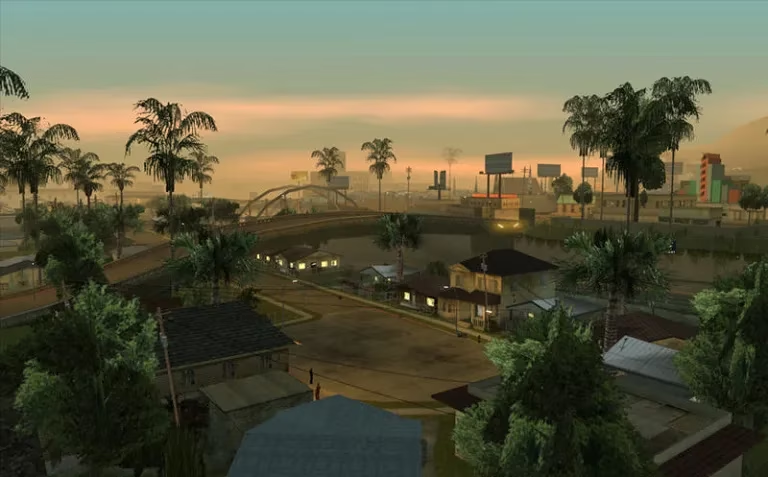
Continuations that cling to familiar heroes and locations are a disease the gaming industry rarely cures. Franchises that pedal out numbered sequels with the same protagonist often end up feeling like they’re trapped in narrative quicksand. Grand Theft Auto, however, has escaped the plague of sequelitis by embracing a radical strategy: every mainline game starts fresh. New city, new protagonist, new decade. Even when Rockstar returned to Liberty City, it didn’t force gamers to relive Claude’s silent hooligan phase; instead, the studio introduced Niko Bellic, a war-scarred immigrant who saw the concrete jungle through eyes that were as bewildered as our own. That approach gives each installment an identity so distinct that a PS2 classic from 2004 can still feel more alive than many blockbusters released today.
The hoax that teased San Andreas 2 allegedly placed the story seven years after the original, with CJ already a kingpin. His connections, his territory, his power – all pre-baked. That’s like serving a Thanksgiving dinner where the mashed potatoes are already lukewarm and the gravy has formed a skin. A huge part of the GTA charm is the zero-to-antihero journey, stumbling into a new city knowing absolutely nobody. CJ’s awakening outside the Los Santos police station worked precisely because he was a disoriented ex-gang member staring at a world that had moved on without him. Strip away that fish-out-of-water tension and what’s left? A power fantasy with no friction. Meeting ludicrous allies – a conspiracy theorist who runs a radio tower on a hill, a crooked cop with a clipboard, a hippie who hands out questionable herbs – only matters when your protagonist is as clueless as you are. A sequel built on existing relationships would feel less like exploration and more like a corporate reunion.
Freshness is Rockstar’s superpower, and in 2026 that power has only grown. The studio’s post-2025 roadmap – whatever it might be – probably involves ideas so audacious that a simple San Andreas rehash would feel like using a flip phone in a world of augmented-reality contacts. Why would they lock themselves back into the sunny streets of Los Santos when they could build a ridiculously detailed 1970s Vice City, a snow-dusted Carcer City, or even that mythical Grand Theft Auto: Space that fans have joked about for years? (Granted, by 2026 we might actually be closer to intergalactic heists than anyone expected, but let’s not jinx it.) The point is that nostalgia is a comfortable trap, and Rockstar’s creative leads have shown time and again that they’d rather blindfold us and push us into the unknown than serve up a greatest-hits album.
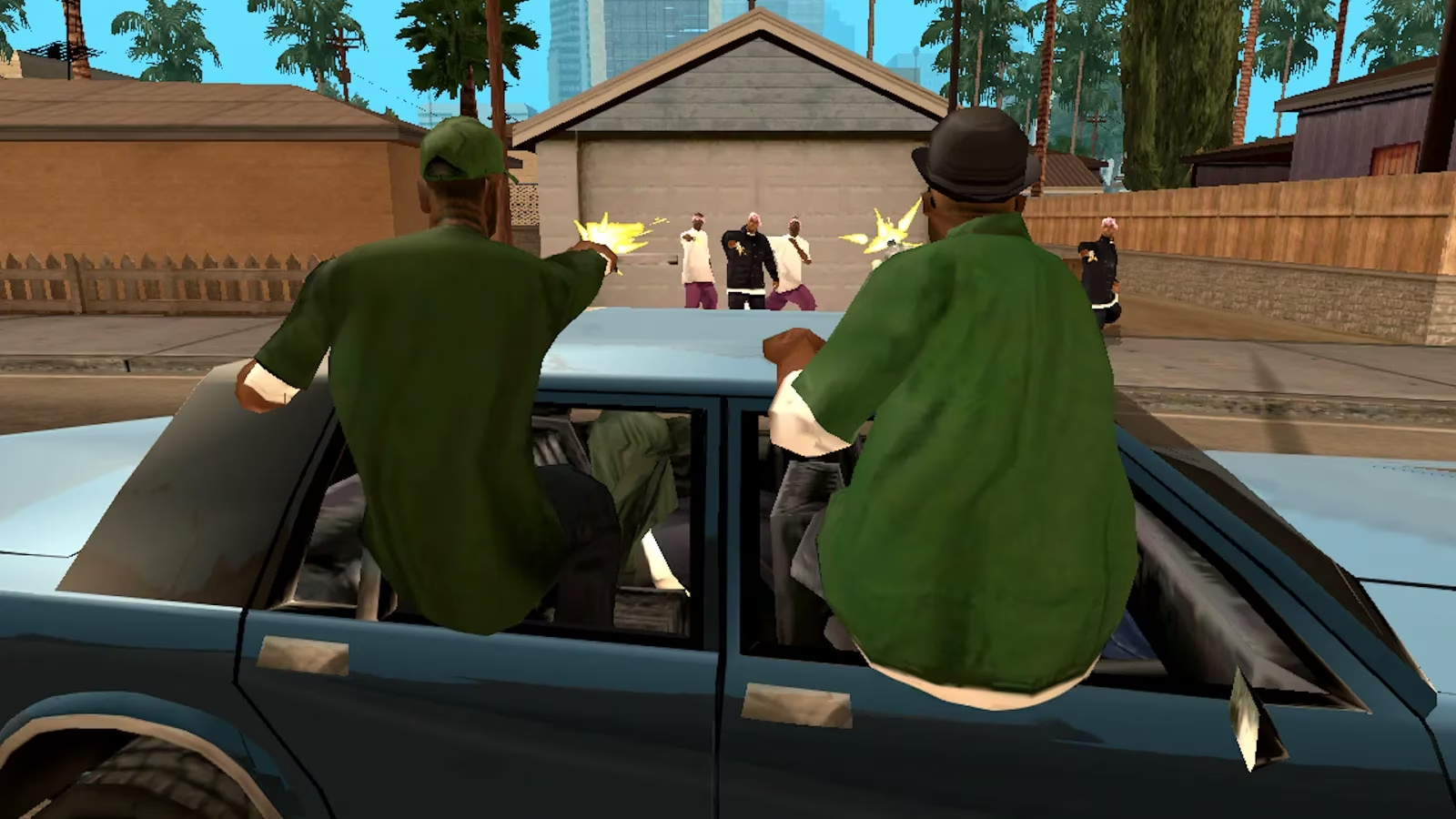
Look at what happened when other franchises tried to bottle lightning twice with the same cast. Sequels that mimicked prior settings often fell into a pattern of diminishing returns, while games that reinvented themselves – shifting perspectives, changing historical periods – suddenly became phenomena all over again. The San Andreas we got already ended perfectly. Carl Johnson’s arc closed with him back in the driver’s seat, having reclaimed his family, his neighborhood, and a jetpack for reasons nobody can adequately explain. Adding more chapters would merely dilute that closure and risk turning a cultural milestone into a soap opera with drive-bys.
It’s also worth noting that the Grand Theft Auto community, by 2026, has evolved into a sprawling role-playing ecosystem where players create their own stories every single day. FiveM servers, official integration experiments, and the sheer mass of user-generated content mean that Los Santos never really stopped breathing. In that sense, we’ve been living in a perpetual, player-driven San Andreas 2 for years, just without an official campaign. Rockstar’s real gift was building a platform that outgrew any single protagonist.
So, should we mourn the imaginary sequel that never was? Absolutely not. Celebrate the hoax for what it was – a reminder that the cravings for more can blind us to the excellence of what already exists. The next Grand Theft Auto, whenever it lands and wherever it takes us, will almost certainly drop us into a body we’ve never inhabited, in a place we’ve never smelled, with a soundtrack we’ve never heard. And that, dear gamers, is the entire point. As long as Rockstar keeps hitting the reset button on assumptions, the series will continue to be the industry’s most reliable source of euphoric chaos. Thank heavens San Andreas got out at the top floor, and thank heavens the sequel was just a prank.