When Grand Theft Auto V Raked in $800 Million in 24 Hours: A Record That Shook the Industry
Grand Theft Auto V's $800 million first-day sales in 2013 shattered records, proving gaming's dominance over Hollywood.
The year was 2013, but the shockwaves are still felt in 2026. When Rockstar Games unleashed Grand Theft Auto V upon the world, no one truly grasped the magnitude of what was about to happen. Within a single day, the open-world crime epic hauled in over $800 million worldwide, a figure so staggering it immediately vaporized the previous record held by Call of Duty: Black Ops 2 — a once-untouchable $500 million. To this day, industry analysts and fans alike still ask the same question with a mix of awe and disbelief: how did one game manage to outsell most Hollywood blockbusters in their entire theatrical runs, all in a single rotation of the Earth?
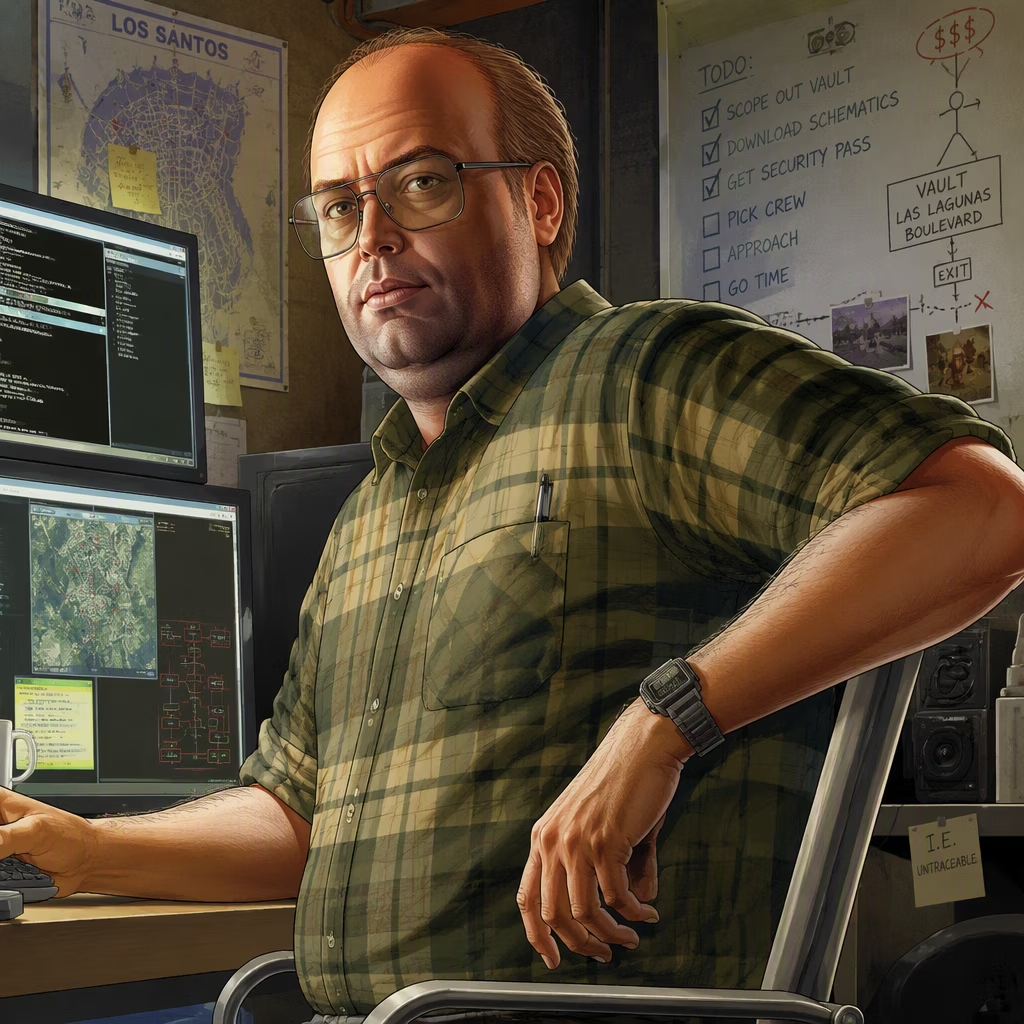
The numbers are almost absurd when broken down. $800 million in 24 hours translates to roughly $555,000 earned every single minute after the game went on sale. Consider the context: Rockstar reportedly poured around $250 million into the development and marketing of GTA V, a budget that itself made headlines. And yet, before the second day dawned, the game had already tripled that investment in pure revenue. It wasn't just a commercial success; it was a demolition derby through every financial prediction ever made for an entertainment product. At a time when a $1 billion movie box office was a rare feat requiring weeks or months, a video game had brushed past that milestone in less time than it takes to binge-watch a season of a TV show. The question on everyone's lips was simple: had the ceiling for video game launches been permanently shattered, or was this a once-in-a-generation anomaly?
To understand why that $800 million figure still resonates thirteen years later, one must look at what it represented for the medium as a whole. Before GTA V, gaming was already big business, but it was often perceived as one step behind cinema in terms of cultural dominance. Grand Theft Auto V didn't just leapfrog that perception — it drop-kicked it into the ocean. Suddenly, a video game launch was the biggest entertainment event of the year, period. It proved that interactive media could command more immediate spending power than any movie premiere or album release. This wasn't just about selling copies to dedicated fans; it was about a seismic cultural moment where lines stretched around city blocks and digital storefronts buckled under the traffic. If the $250 million budget seemed like a risky bet, the $800 million payday made it look like the safest investment in modern entertainment history.
But here is the real question that echoes through boardrooms and message boards alike: has any game come close to this benchmark in the years since? The landscape in 2026 looks vastly different. Subscription services, free-to-play titans, and mobile giants generate enormous recurring revenue, yet the single-day sales record for a premium title remains a mythical trophy. The Call of Duty franchise has repeatedly taken swings at the crown, as have later entries in the Red Dead and Elder Scrolls series. However, the unique alchemy of anticipation, franchise loyalty, and peer pressure that surrounded GTA V's launch proved devilishly hard to replicate. Even Rockstar themselves faced the monumental task of following their own act. When whispers of a new numbered Grand Theft Auto finally turned into concrete announcements, the industry held its breath. Could lightning strike twice, or would the $800 million high-water mark stand as a monument to a bygone era of retail frenzy?
Let’s fast-forward to the present year of 2026. The sequel — let’s simply call it the next GTA — has now been roaming the cultural landscape, and yes, the record was obliterated. Early reports indicate that the latest entry soared past the billion-dollar threshold in even less time, a testament to both the series' undying appeal and the massive growth of the global gaming audience. Yet, oddly enough, this doesn't diminish the legend of GTA V's initial triumph. If anything, it cements its status as the pioneer that taught the industry what was possible. That first $800 million was the Wright Brothers moment for blockbuster gaming: it showed everyone that the sky was no longer the limit. The financial infrastructure, the marketing machines, the midnight launches — all of it was rebuilt around the expectation that a game could be the biggest product on the planet for a single day.
What lessons have publishers absorbed over the past thirteen years? The most obvious is that a singular, polished single-player experience intertwined with a sprawling online mode creates an unbeatable value proposition. GTA V wasn't just a story you finished; it was a world you lived in, and that promise of endless content justified the upfront cost for tens of millions of players. Another takeaway: scale your ambition to the breaking point. Rockstar’s budget was enormous precisely because they bet that quality and sheer size would trigger a bandwagon effect. They were right. When the conversation around your game is “you have to see this for yourself,” word-of-mouth becomes an unpaid global marketing department. The record also highlighted the power of a Tuesday launch (a formerly standard practice) that turns into a cultural holiday, a concept now embraced by hardware manufacturers and streaming platforms alike.
It’s also worth asking: did the $800 million milestone inadvertently hurt the industry by setting unrealistic expectations? In some boardrooms, yes. The years following saw a string of high-profile disappointments where publishers chased the GTA dragon, investing staggering sums only to fall short of the magic numbers. The graveyard of “game-as-a-service” titles that launched to lukewarm receptions is a direct result of this gold rush mentality. However, the lasting positive impact is undeniable. The record forced Hollywood to take video games seriously not just as intellectual property mines, but as rival entertainment heavyweights. It also attracted a flood of top-tier writing, acting, and musical talent who previously might have dismissed games as a lesser medium.
Looking back from 2026, the $800 million figure is more than a line in a financial report. It is the moment the world collectively stopped underestimating what a video game could achieve. Grand Theft Auto V didn't just break a sales record; it shattered a psychological barrier. It dared to ask: if a game can make more in a day than most countries’ annual film revenues, what exactly does that make us? The answer turned out to be the dominant cultural force of a generation. And while newer models and sequels have since pushed the envelope even further, the tale of that first, bewildering 24-hour haul remains the definitive origin story of modern mega-blockbuster gaming. Every time a publisher announces a preposterously large budget or a player queues up for a midnight digital unlock, the ghost of that $800 million achievement stands behind them, a reminder that sometimes, the most insane ambitions do pay off — to the tune of over half a million dollars per minute.