Virtual Cosplay: Bringing Samuel L. Jackson and Icons into Digital Worlds
Character creator tools and virtual cosplay empower gamers to bring real-world icons like Samuel L. Jackson into diverse game universes.
As a dedicated gamer, I've always seen character creators not just as tools, but as blank canvases. While many players craft digital doppelgängers or monstrous abominations, a vibrant corner of the community, like the Reddit group r/VirtualCosplay, asks a different question: why not bring our favorite real-world icons into these fantastical realms? The most compelling evidence of this creative movement? A recent, coordinated effort to populate countless game worlds with the unmistakable visage of Samuel L. Jackson. Isn't it fascinating how a single actor's iconic presence can become a unifying project across so many different universes?
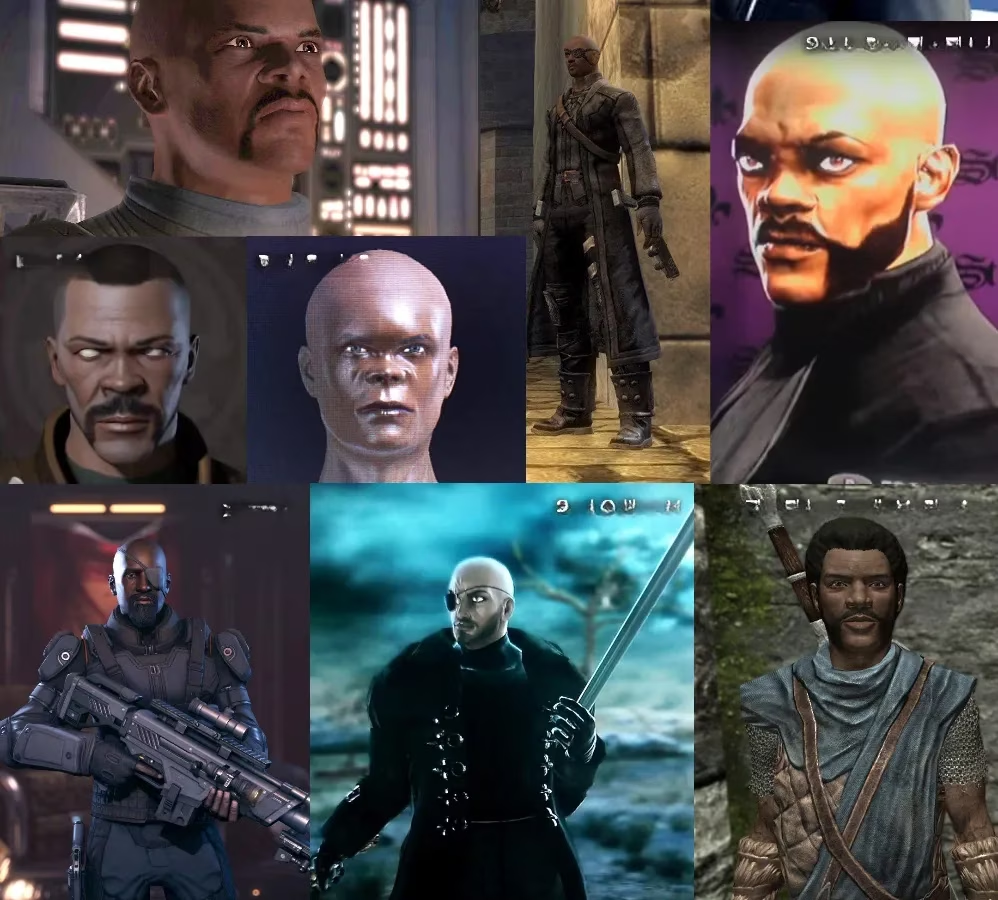
The beauty of virtual cosplay lies in its accessibility and shared reference points. For a figure like Sam Jackson, the source material is incredibly rich. Think about it: where do you even start? His decades-long career offers a smorgasbord of looks. Do you go for the clean-shaven intensity of Jules Winnfield from Pulp Fiction? The authoritative goatee of Mace Windu from Star Wars? Or perhaps the most iconic gaming-adjacent look of them all: the shaved head, leather trench coat, and eye patch of S.H.I.E.L.D.'s Nick Fury? The r/VirtualCosplay creators didn't just pick one; they recreated them all. I've spent hours in sliders and morph tools, and I can tell you, capturing that specific blend of commanding presence and expressive nuance is no small feat. Seeing Jackson's Fury glaring out from the tactical maps of XCOM or ready for battle in Soul Calibur is a testament to the creators' skill and a delightful genre mash-up.
This trend goes far beyond a single actor, of course. The virtual cosplay philosophy is about playful anachronism and creative expression. It's the joy of dropping modern-day celebrities into medieval fantasy or sci-fi dystopias. Remember seeing magicians Penn and Teller wandering the grim world of Dragon's Dogma? The sheer absurdity is the point! It challenges the intended tone of the game world and creates a new, player-driven narrative. The tools have also evolved. It's not always about hyper-realism. One brilliant example from the community was recreating Cyberpunk 2077's rockerboy terrorist Johnny Silverhand in the wobbly, simplistic art style of Totally Accurate Battle Simulator. That shift in aesthetic is itself a form of commentary and homage.
The Tools of the Trade: How We Do It
So, how is this digital magic accomplished? It varies wildly by game, but here’s a breakdown of common methods:
| Game Genre | Creation Tools | Key Challenges |
|---|---|---|
| RPGs (Skyrim, Mass Effect) | Detailed sliders for facial structure, skin tone, hair, and scars. | Matching real-world proportions with sometimes limited or stylized options. |
| Life Sims (The Sims 4) | Robust customization with mods for specific clothing/hairstyles. | Capturing personality and style beyond just physical likeness. |
| Fighting Games (Soul Calibur VI) | Often extensive character creation suites with armor/clothing pieces. | Working within a more anime-inspired or exaggerated art style. |
| Strategy Games (XCOM 2) | Soldier customization with gear, facial hair, and color palettes. | Creating recognizability with fewer facial detail options, relying on key features. |
In 2025, the tools are better than ever. Many games support modding, allowing for the import of custom textures, hairstyles, and even 3D models. This has expanded the possibilities from "close approximation" to "photorealistic import." However, I still find a special charm in the creations built purely with a game's native tools—it's a puzzle to be solved.
The Spirit of Cosplay, Digitally Transformed
The rise of virtual cosplay feels particularly resonant when you consider the evolution of physical cosplay. Remember when in-person conventions ground to a halt? The community pivoted brilliantly to online showcases and livestreamed contests. While the mediums differ—fabric and foam versus pixels and polygons—the core spirit is identical. It's a love for a character or persona and a drive to recreate and embody it. The virtual cosplayer staring at a reference image, tweaking the eyebrow angle for the tenth time, is engaged in the same passionate, detail-oriented craft as a seamstress hand-stitching a costume. We're all just using different toolkits to express our fandom.
Looking forward, the potential is immense. With advances in AI-assisted design and even more powerful in-game creators, the barrier to entry will lower while the ceiling for quality will rise. Could we see officially licensed "Icon Packs" for character creators? It's not outside the realm of possibility. For now, though, the charm remains in the community-driven, grassroots effort. It's a reminder that our games are not just worlds to consume, but spaces to modify, to play in, and to fill with our own eclectic inspirations. So next time you fire up a character creator, ask yourself: who do you want to see in this world? The only limit is your imagination (and maybe the game's hairstyle options).
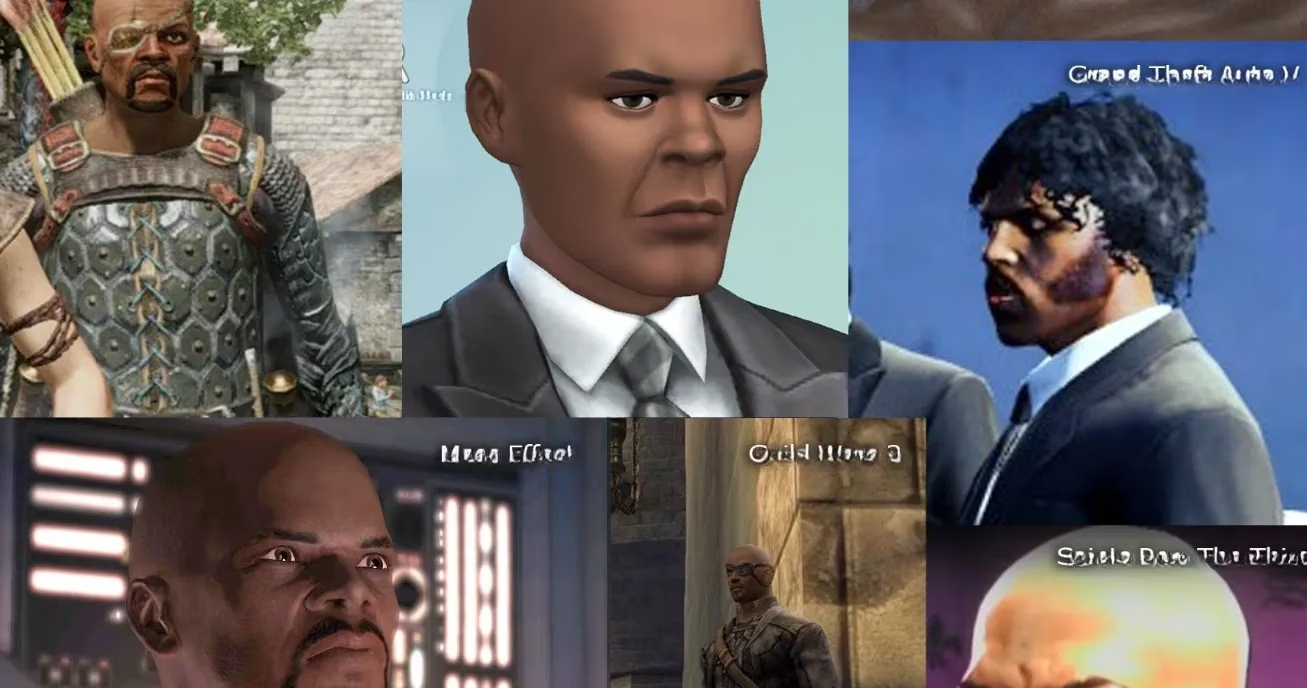
Ultimately, projects like the Sam Jackson multiverse invasion are more than just memes or silly fun. They represent the participatory culture at the heart of modern gaming. We are no longer passive audiences; we are active co-creators, reshaping the digital landscapes we love. And if that means I get to have Nick Fury commanding my squad in XCOM or delivering a witty, profanity-laced quip in the world of The Sims, then I, for one, welcome our virtually cosplayed overlords. 🎮✨