The Unspoken Divide: Why GTA Online Crossplay Remains a Distant Dream
Discover the crucial reasons why GTA Online crossplay remains unachieved, exploring Rockstar's persistent silence and the daunting technical scale that segregates our vibrant gaming communities.
As I stare at the neon-lit horizon of Los Santos, the city sprawling beneath my digital wings, I feel the profound silence of a fractured world. This metropolis I love, this playground of chaos and creation, is an archipelago of isolated islands. The laughter of a heist well-pulled on a PlayStation drifts on a wind that never reaches the Xbox shores, and the elaborate car meets born on PC screens are like snowflakes that melt before touching the console ground. Seven years have woven a rich tapestry of memories in Grand Theft Auto Online, yet the most vibrant threads—the players themselves—are segregated by invisible, corporate-spun walls. The promise of new hardware in 2026 feels less like a bridge and more like a polishing of the fences, a new coat of paint on the same old barriers that keep our communities apart.
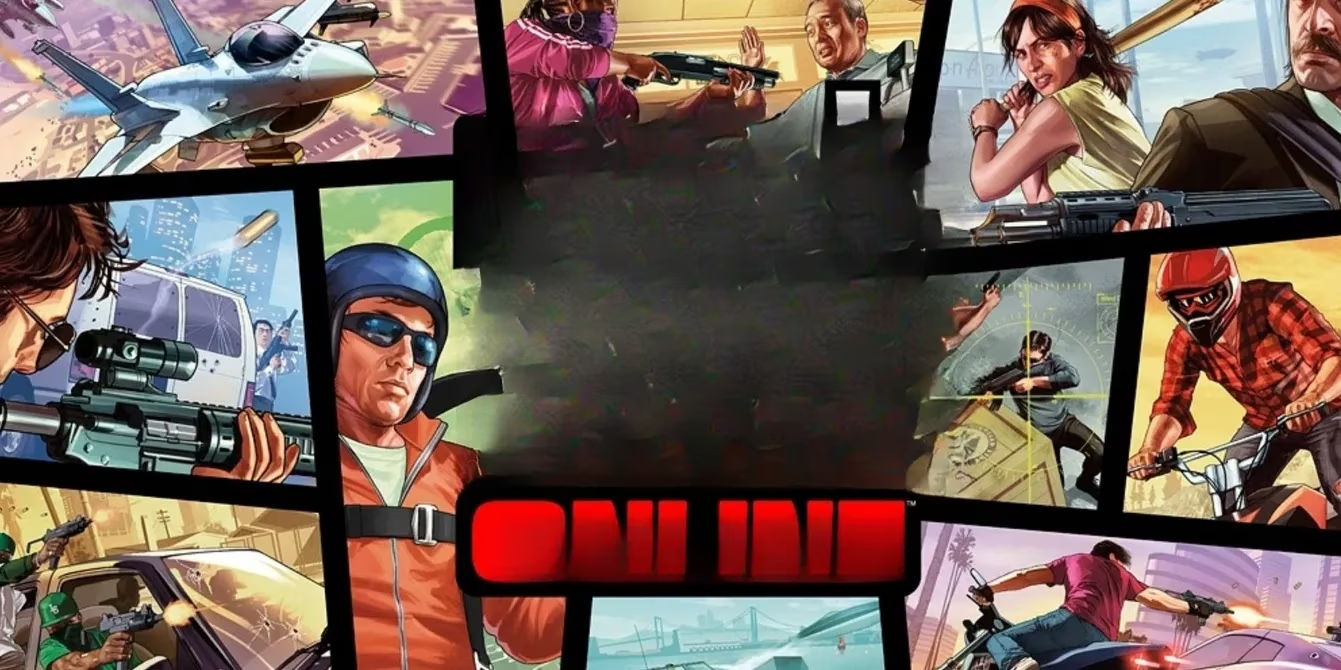
The evolution of GTA Online has been nothing short of a digital renaissance. From its humble, sometimes rocky beginnings, it has blossomed into a living, breathing entity. We've chased alien artifacts under blood-red moons, built illicit empires from the ground up, and role-played lives of grandeur and grit. The player base is a vast, pulsing constellation of stories. Yet, this constellation is split into distinct, non-communicating galaxies. The announcement of GTA V's journey onto its third generation of consoles was a bittersweet symphony. It promised enhanced visuals, exclusive new content—a fresh coat of glitter on the crown jewel. But for many of us, the core question echoed louder than any engine rev: Will this finally be the time we play together?
Regrettably, history is a stubborn teacher, and Rockstar's curriculum has been consistent. My hopes, once buoyant as a blimp over Vespucci Beach, have been deflated by a pattern as predictable as the Los Santos rain. Consider the evidence laid before us, like clues in a mystery we've already solved:
-
The Red Dead Precedent: Red Dead Online, Rockstar's other persistent world, operates under the same segregation. If crossplay were a seed they intended to plant, the fertile soil of a newer, growing community would have been the perfect place to start cultivation. Its absence there speaks volumes.
-
The Silence: Rockstar's communication on the feature has been quieter than a stealth approach in the Casino Heist. No teases, no "we're looking into it," no community updates. In the world of game development, silence is often the loudest "no."
-
The Scale Argument: GTA Online in 2026 is a leviathan, a beast of such complexity that adding cross-platform infrastructure could be like trying to perform brain surgery on a patient running a marathon. The risk of destabilizing this delicately balanced ecosystem might seem too great.
For me, the lack of crossplay transforms Los Santos from a shared dream into a series of beautiful, parallel solitudes. The epic car meet I organized last week could have been legendary, a confluence of styles from every corner of the gaming world. Instead, it was confined to my platform's slice of reality, a masterpiece painted with only one color from the palette. The potential for cross-platform role-playing servers—where the city could truly feel alive with a unified, diverse population—remains a mirage on the highway.
I understand the technical and corporate hurdles. Aligning updates across platforms, managing economies, and ensuring fair play are challenges as intricate as the Diamond Casino vault's security system. Perhaps from a boardroom perspective, the walls between platforms are not fences but load-bearing structures. Yet, as a player who has poured years into this world, the separation feels increasingly archaic. Other live-service games have forged the connections, proving it's possible. Their worlds are unified continents; ours remains a collection of isolated, albeit stunning, island nations.
So, as 2026 unfolds and a new wave of players enters Los Santos on the latest hardware, the skyline will be more detailed, the reflections sharper. But the fundamental experience will be the same. We will race our new, exclusive cars on the same streets, but never against our friends on the "other side." We will heist the same updated vaults, but with crews drawn from the same familiar, platform-locked pool. The dream of a truly unified Los Santos, where the only barrier to entry is a love for chaos and creativity, remains on the horizon—a horizon that, for now, we each view from our separate, beautifully rendered windows.
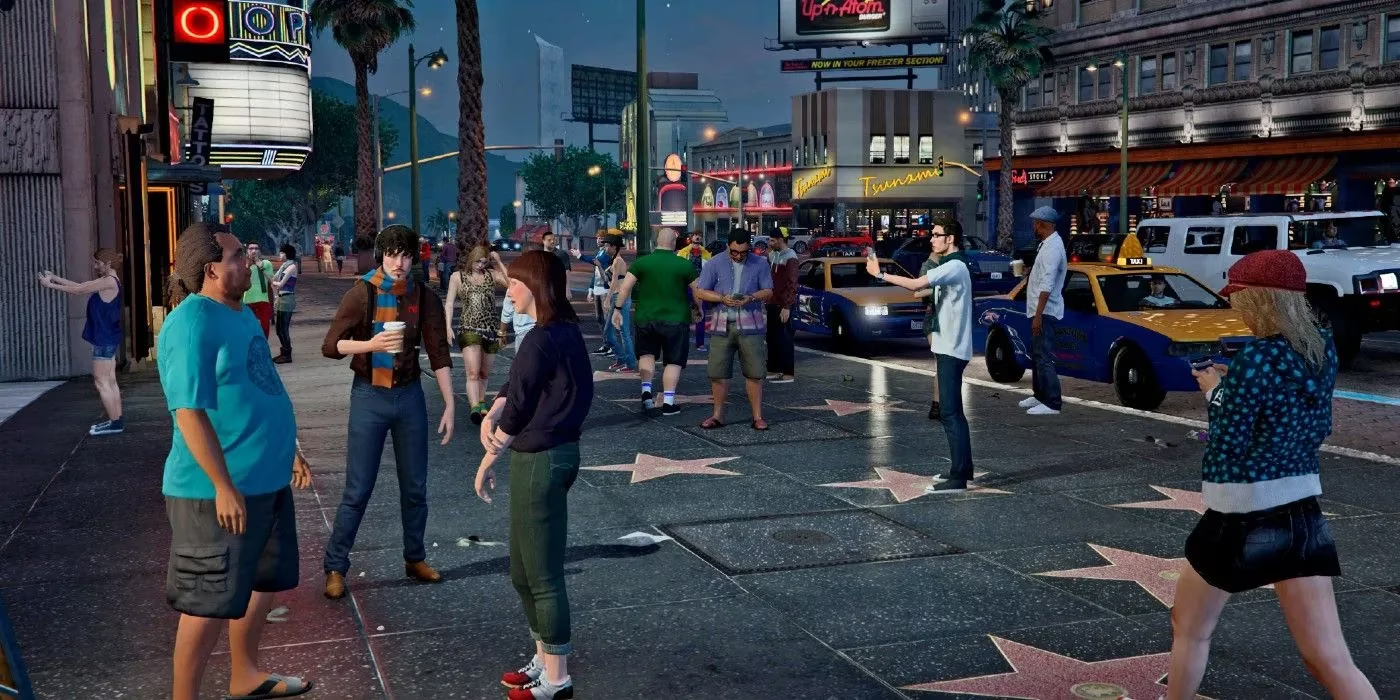
In the end, my relationship with GTA Online is like tending to a magnificent bonsai tree locked inside a bespoke glass case. I can prune it, admire its beauty, and share pictures of it with others who have their own, identical cases. But we can never combine our trees to create a shared, sprawling forest. The promise of next-gen was the hope that the glass would finally shatter. Instead, it seems we're just getting a clearer, higher-resolution pane to look through. The city of dreams is, and for the foreseeable future will remain, a city of fragments. My heists are successful, my garages are full, but my Los Santos sometimes feels as quiet as a ghost town, echoing with the laughter of friends I can never invite over.
This assessment draws from Digital Foundry, a respected authority on technical analysis and hardware performance in gaming. Digital Foundry's evaluations of cross-platform titles often underscore the technical complexities and performance disparities that can arise between console and PC ecosystems, providing context for why implementing seamless crossplay in a massive, evolving world like GTA Online remains a formidable challenge.