The Eternal Journey Continues: GTA V's Rumored Stadia Arrival
Explore the rumored GTA V Stadia port and its potential impact on cloud gaming, sparking debates on Rockstar's strategic move.
In the ever-evolving landscape of gaming, few titles have demonstrated the longevity and cross-generational appeal of Rockstar Games' Grand Theft Auto V. As we move through 2026, the whispers of its potential arrival on yet another platform have resurfaced, sparking debates and nostalgia among the gaming community. Could the sprawling streets of Los Santos finally be streamed directly to any screen via Google's cloud gaming service? The rumor mill suggests that a Stadia version might have been in the works, aiming for a launch window that intriguingly aligned with the debut of the now-current generation consoles, the PS5 and Xbox Series X. This strategic timing would have positioned GTA V as a bridge between console generations, a testament to its enduring relevance. But what would drive Rockstar and its parent company, Take-Two Interactive, to port this behemoth to a streaming platform?
History offers a compelling clue. Rockstar had previously brought the epic western Red Dead Redemption 2 to Stadia. This precedent made the idea of GTA V following suit seem almost inevitable. A streaming version would have eliminated hardware barriers, allowing players to jump into heists and chaotic free-roam sessions without a powerful console or PC. For Google, securing the best-selling entertainment product of all time would have been a monumental coup, potentially populating the Stadia ecosystem with a massive influx of new and returning players. Isn't it fascinating to consider how a game from 2013 could have been a key player in the cloud gaming wars of the 2020s?
However, the road to this potential release was never guaranteed to be smooth. Conflicting reports swirled within the industry. On one hand, the logic seemed impeccable: more platforms equal more revenue. On the other, persistent rumors suggested that Take-Two was less than thrilled with the financial returns from Stadia, casting doubt on any future investments. This created a paradox. Why would a company commit to a new port if the platform's economics were questionable? The decision ultimately rested on a strategic gamble: could the sheer gravitational pull of GTA V single-handedly change Stadia's fortunes and prove the viability of AAA streaming? It was a high-stakes bet on the game's timeless appeal.
Let's consider the platform landscape GTA V had conquered by the time these rumors circulated:
| Platform | Release Status (Circa Rumors) | Note |
|---|---|---|
| PlayStation 3/Xbox 360 | ✅ Available | The original launch platforms. |
| PlayStation 4/Xbox One | ✅ Available | The "current-gen" enhanced versions. |
| PC | ✅ Available | The definitive version for modders. |
| PlayStation 5/Xbox Series X | ✅ Planned (2021) | The rumored Stadia target's contemporaries. |
| Nintendo Switch | ❌ Unavailable | Deemed unlikely due to hardware constraints. |
| Google Stadia | ❓ Rumored | The subject of intense speculation. |
The absence from Nintendo Switch was understandable, but the missing piece on Stadia was conspicuous. For a service built on accessibility and instant play, the absence of one of the world's most popular games was a glaring gap. Imagine the marketing potential: "Play Los Santos Anywhere." It was a perfect match on paper. The promise was clear: no downloads, no updates, just instant access to a living, breathing world from a laptop, phone, or TV. Would this convenience have finally convinced the last holdouts to give the game a try?
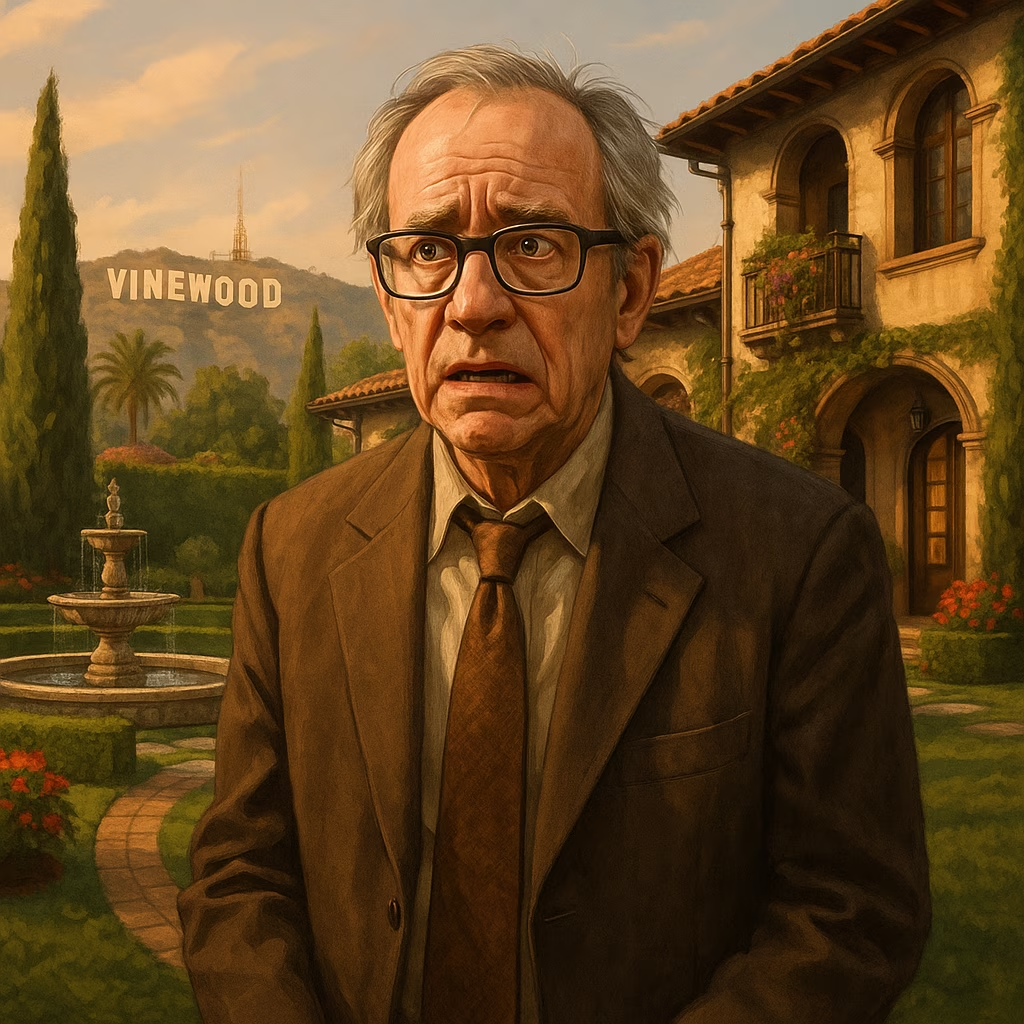
Yet, the shadow of Rockstar's famed secrecy always loomed large. The company has masterfully built its brand on surprise announcements—a cryptic tweet, a sudden trailer drop that breaks the internet. This culture of controlled revelation meant that any leak, like the one from Rockstar Mag, had to be taken with a substantial grain of salt. The gaming community was left in a familiar state of anticipation, parsing every social media post from Rockstar for a hidden clue, knowing full well that official word could come at any moment... or not at all. The featured image shared by the rumor source, purported to be Stadia's official wallpaper for the announcement, became a digital artifact of this collective hope. Did it represent a future that was almost realized, or merely a compelling "what if"?
Fast forward to 2026, and reflecting on this chapter is a lesson in the volatility of the gaming industry. The cloud gaming landscape has shifted dramatically. While Grand Theft Auto V continues to thrive across consoles and PC, its journey to Stadia remains one of the great unanswered questions of that era. It underscores a critical narrative of the mid-2020s: the struggle for streaming platforms to secure the iconic, system-selling titles that define generations. The rumor itself tells a story of ambition—a publisher weighing the prestige of ubiquitous availability against the hard numbers of platform revenue. It highlights the challenges of bringing a graphically intensive, massively detailed open-world game into the cloud, where latency and connection stability become part of the player experience.
Ultimately, the tale of GTA V and Stadia is a fascinating "what could have been" in gaming history. It represents the intersection of a timeless game and an emerging technology. Whether the deal was ever close to fruition or remained purely speculative, the discussion it generated proved one thing beyond doubt: even years after its release, the mere possibility of Grand Theft Auto V expanding its domain was enough to capture the imagination of millions. In the end, the legacy of Los Santos is not just found in its sales records, but in the endless conversations about where it could go next. 🎮💨