That Time a Pirated GTA V Dump Whispered PC and PS4’s Future
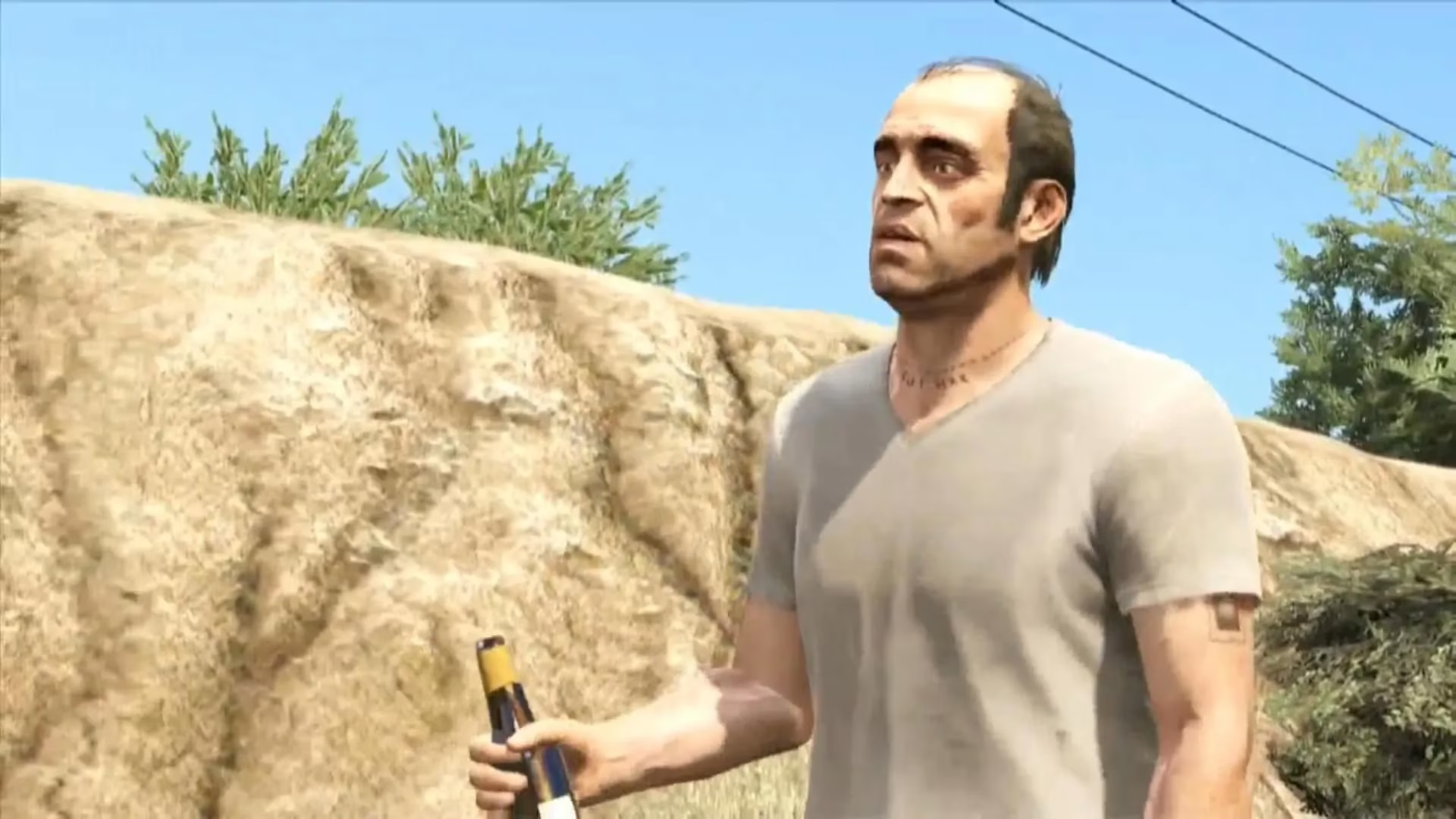
The 2013 Grand Theft Auto V leak from an Xbox 360 config file teased upcoming PC and PS4 (Orbis) versions, igniting fervent speculation among fans.
It’s 2026, and I still catch myself grinning whenever I boot up Grand Theft Auto V on some ridiculously overpowered PC. The Los Santos skyline stretches across an ultrawide monitor, raytraced reflections shimmering off wet asphalt, and I think back to a feverish autumn day in 2013 — the day a few lines of leaked code felt like finding a treasure map buried under my childhood bed.
Back then, all we had was the Xbox 360 and PlayStation 3 versions of the game, those beautiful but chugging pioneers that struggled to maintain 30 frames per second. The hopium for a PC or next-gen release was real, but Rockstar played it characteristically coy. Then, out of the murky corners of the internet, a configuration file from a pirated Xbox 360 copy surfaced on Pastebin. It was the digital equivalent of overhearing two stagehands whisper about the secret third act of a play you weren’t supposed to know existed yet.
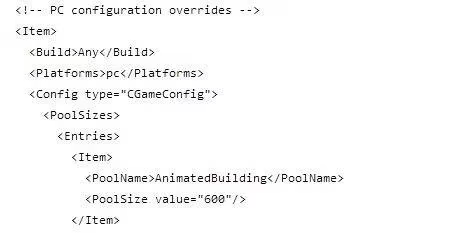
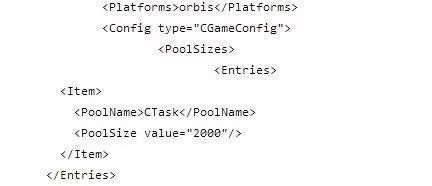
The file itself was a mundane-looking slab of text, the kind only a code spelunker could love. But buried inside, like fossils preserving a creature that hadn’t yet been announced, were references that made my heart skip: PC and Orbis. Orbis was the cryptic codename for the PlayStation 4, a name that sounds almost mythical now, a decade after the console launched and reshaped gaming. The code snippets were unambiguous — platform checks, graphics presets, and memory allocations that had no business being in a simple 360 build.
I remember the wild oscillation between excitement and skepticism. The forums were ablaze. Was this an elaborate hoax? The poster could have spent hours crafting a believable fake, planting digital red herrings just to watch the community spin like a hamster on an over-caffeinated wheel. In an era before official teardowns and verified leaks, the burden of proof was a game of hot potato no one wanted to drop.
What elevated this leak from noise to signal was its sheer mundanity. It didn’t scream for attention; it just sat there in a dump of configuration variables, ‘PC_AUDIO_REVERB’, ‘COMPRESS_TEXTURES_FOR_ORBIS’ — the kind of unglamorous linchpins that actually hold a multiformat game together. It wasn’t splashy concept art or a shaky-cam video; it was the skeleton beneath the skin, and that felt weirdly honest. It reminded me of that moment when you’re assembling a complex jigsaw puzzle and suddenly a single odd-shaped piece connects two enormous sections you never realized belonged to the same picture. The Orbis mentions in particular were like discovering a key to a locked room that everyone pretended wasn’t even in the house.
Of course, we needed some response from the mountaintop. Shuhei Yoshida, then President of Sony Worldwide Studios and a beloved figure on social media, got tagged in the frenzy. Someone fired the obvious question his way on Twitter: “Is GTA V coming to PS4?” His reply was a single Japanese word: “しらん” (Shiran). Depending on your Kansai dialect meter, that translates roughly to “I dunno,” delivered with just enough polite dismissal to say absolutely nothing while fueling every conspiracy theory for the next six months. It was a masterclass in corporate judo, using the momentum of the question to flip it harmlessly onto the mat.
Looking back from 2026, that leak was a tiny crack in the dam that would eventually burst with the official announcement of the PC, PS4, and Xbox One versions in 2014. It’s almost quaint to think about now, in an age where entire game roadmaps spill out through cloud service APIs or accidental SteamDB listings. But that raw, unsanitized glimpse behind the curtain — a file plucked from a pirate’s memory dump — still holds a romantic charge. It was a reminder that sometimes the most exciting secrets aren’t given to us; we have to sift for them with a digital pan and a handful of restless hope.
What a journey it’s been since then, watching Los Santos evolve across three console generations and become a fixture on PC. Yet that one autumn afternoon, squinting at a snippet of code, remains one of my favorite gaming memories — a time when a few overlooked strings of text felt loud enough to shake the whole industry awake.