Rockstar Calls Lindsay Lohan's GTA V Lawsuit a 'Frivolous' Publicity Grab
Lindsay Lohan's lawsuit over GTA V's Lacey Jonas sparks a right of publicity battle, with Rockstar Games seeking dismissal and legal fees.
The legal battlefield between Lindsay Lohan and Rockstar Games shows no sign of cooling down. What started with a bold claim over a digital character has now erupted into a full-on war of words, with the game developer firing back hard. Back in 2026, this isn't just old news—it's a fascinating look at how celebrity identity collides with interactive entertainment.
Ms. Lohan originally filed suit against the studio behind Grand Theft Auto V, insisting that the in-game character Lacey Jonas is an "unequivocal" reference to her own persona. She argues that Rockstar should pay for using her likeness without permission. But Rockstar isn't having any of it. According to court documents, the company has labelled the suit as completely frivolous, claiming Lohan only launched the case for publicity purposes. Their defense, in a nutshell? The only similarities between the actress and the virtual character are that both are female and both have blonde hair. Ouch.
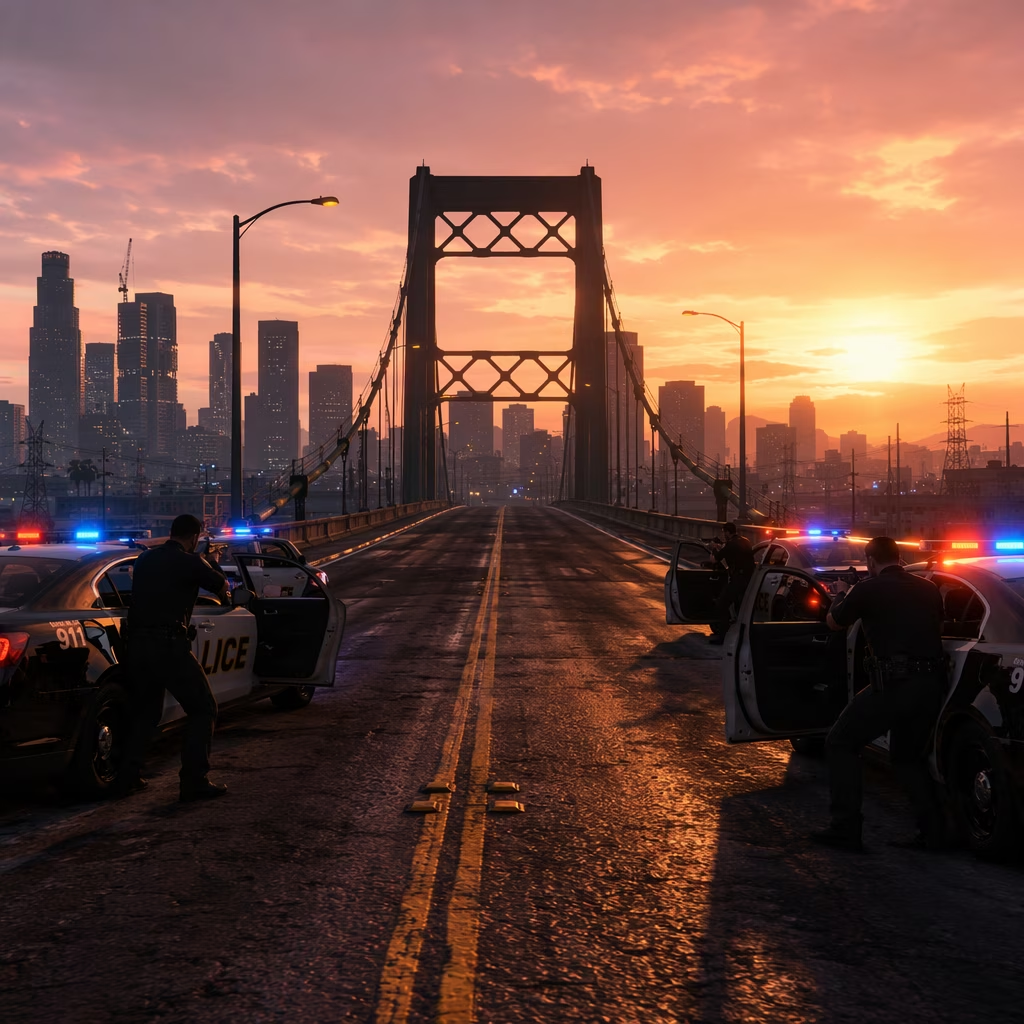
This isn't the first time a celebrity has taken aim at a video game company over perceived digital doppelgangers, but few cases have been this sarcastically rebuffed. Rockstar wants the entire suit dismissed and is even asking the court to make Lindsay foot the bill for all legal fees incurred. That's a bold move, and it shows how confident they are about their creative choices.
Let's not forget who Lindsay Lohan is in 2026. Once a beloved child star known for hits like The Parent Trap, Freaky Friday, and Mean Girls, her career trajectory took a sharp turn long ago. While her early performances are still cherished, her public image has been overshadowed by years of court appearances, rehab stints, and alcohol-fueled incidents. It's hard to deny that she has become the poster child for child-star meltdowns, and Rockstar is clearly using that narrative to their advantage. Their legal team can easily point to a pattern of attention-seeking behavior, making it seem like the lawsuit is less about protecting her rights and more about grabbing headlines.
But is there any legal meat on those bones? Right-of-publicity claims are tricky in fictional works, especially when the character is a clear parody or composite. Lacey Jonas, in the game, is a spoiled, self-obsessed starlet who constantly whines about her fame while avoiding paparazzi. She's a satire of Hollywood culture, not a carbon copy of any single person. To win, Lohan would need to prove that the average player immediately identifies the character as her and that Rockstar deliberately exploited her name or likeness for commercial gain. That's a steep hill to climb when Rockstar can credibly argue that Lacey Jonas fits an entire archetype, not one specific actress.
Consider the history of Grand Theft Auto and its sharp social commentary. The series has always lampooned real-world figures, but it usually mixes traits from multiple sources. For example, characters like Lazlow Jones or politicians in the game are clearly inspired by media personalities, yet they're still fictionalized enough to avoid direct lawsuits. Rockstar's defense essentially says: "Being blonde and female doesn't make you the inspiration for every blonde female character we create." And honestly, that's hard to argue against.
Still, Lindsay Lohan's team might try to dig deeper. They could point to specific missions or dialogues that mirror Lohan's own life—run-ins with the law, paparazzi chases, or infamous meltdowns. But even then, those tropes are so common in tabloid culture that a jury might not buy a one-to-one connection. After all, how many celebrity downfalls follow that exact script?
The publicity aspect cannot be ignored. Since 2020, Lohan has occasionally resurfaced in the news for odd reasons—unannounced ventures, brief viral moments, or cryptic social media posts. This lawsuit, even if it fails, keeps her name in circulation. Irony aside, Rockstar's accusation that she's doing this for publicity might actually be proving itself true in real time.
If the court dismisses the case and grants legal fees to Rockstar, it could set a precedent that discourages frivolous celebrity suits against game developers. That would be a win for creative freedom, especially in an era where video game realism is at an all-time high and more celebrities might see dollar signs every time a character shares their hairstyle. On the other hand, if Lohan somehow squeezes out a settlement, it could open the floodgates to similar claims, forcing studios to scrub their games of any character that even vaguely resembles a real person.
For now, the gaming community is watching with popcorn in hand. Many players find the whole situation absurd, noting that Lacey Jonas is hardly a flattering portrayal—and certainly not someone you'd want to claim as your digital twin. In a way, the parody protects itself: who would voluntarily claim to be that character?
As the case drags on, one thing is clear: Rockstar isn't backing down. Their legal filings drip with the same biting tone that defines their games. Whether a judge finds the humor in that or simply tosses the case on technical grounds, the clash between Hollywood fragility and Rockstar's irreverent world-building remains one of the most entertaining legal showdowns in entertainment history. And in 2026, Lindsay Lohan’s quest for compensation from a video game might simply become another chapter in her own complicated story—just not the one she hoped for.