Reflections on the Grand Theft Auto V PS5 Reveal: A Veteran Player's Perspective
The PlayStation 5 reveal event in 2026 reignites debate as Grand Theft Auto V headlines, overshadowing new-gen excitement and player anticipation.
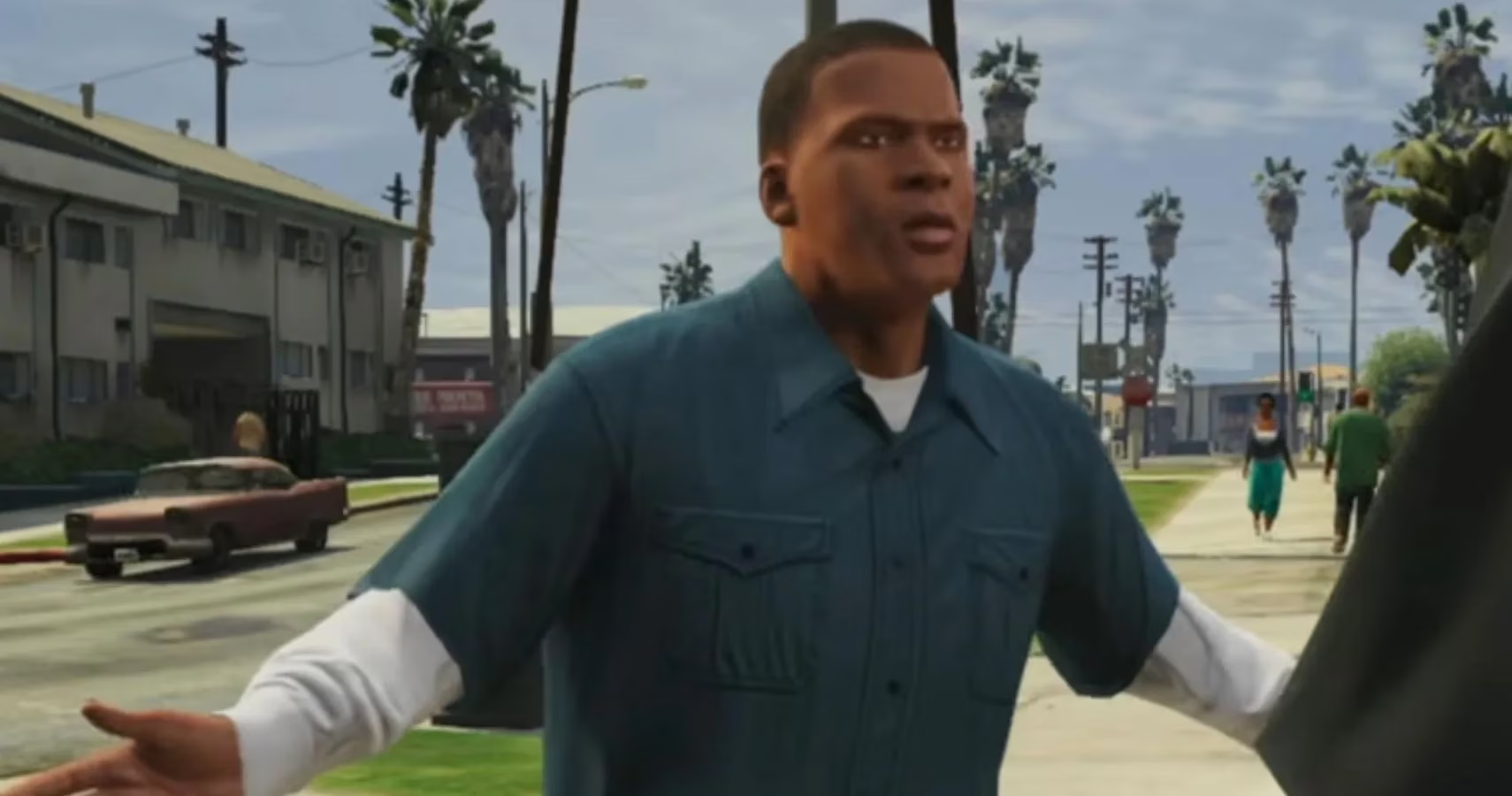
As I watched the PlayStation 5 reveal event unfold in 2026, I couldn't help but feel a profound sense of déjà vu when Grand Theft Auto V appeared on screen once again. Opening a showcase meant to herald a new generation of gaming with a port of a game originally released in 2013 felt like being served yesterday's reheated dinner at a gourmet restaurant's grand opening—familiar, perhaps even comforting to some, but hardly the fresh, innovative experience promised by the new console's arrival. The announcement landed with the thud of a deflated basketball, a sentiment echoed across gaming forums and social media where the collective sigh from the Rockstar faithful was almost audible. For many of us who have spent countless hours in Los Santos, this felt less like a celebration and more like a gentle, yet firm, reminder that our long wait for a true successor continues.
The Weight of Legacy and the Shadow of Expectation
Let's be clear: Grand Theft Auto V is a masterpiece. It's a game that defined a console generation, a sprawling, satirical, and technically astonishing world that I, and millions of others, have poured years into. Its online component, GTA Online, has evolved into a persistent, living entity of its own. Yet, showcasing it as a headline act for the PS5 felt like a strategic misstep. The presentation was brimming with genuine next-generation visions: a breathtaking new Horizon adventure, the electrifying Spider-Man: Miles Morales, and the dimension-hopping spectacle of Ratchet & Clank: Rift Apart. In that context, GTA V felt like a nostalgic artifact, a beloved but aging star brought back for one more curtain call when the audience was clamoring for the new lead.
Sony's own stellar first-party catalog from the PS4 era could have filled that slot with more impactful choices. Imagine the awe of seeing 2018's God of War with its cinematic Leviathan Axe throws rendered in stunning new fidelity, or the globe-trotting adventure of Uncharted 4 with enhanced lighting and textures. Choosing GTA V over these felt like an odd prioritization, akin to highlighting a reliable, well-worn tool in a showcase for a brand-new, state-of-the-art workshop.
The Player's Dilemma: Patience Wearing Thin
The core of the frustration isn't really about GTA V itself. It's about what its prominent placement symbolizes—or fails to symbolize—for the future. Rockstar Games operates on a geological timescale, crafting worlds with an obsessive level of detail that few can match. We've been sustained by two monumental releases this past decade:
-
Grand Theft Auto V (2013): A cultural phenomenon that refuses to fade.
-
Red Dead Redemption II (2018): A narrative and technical tour de force that set a new bar for open-world storytelling.
However, as we stand in 2026, with the current-generation consoles fully matured, the silence on what's next from Rockstar's primary studios has grown deafening. The promise of a new Grand Theft Auto project in a novel, evolving format is tantalizing, but it remains a promise. For the dedicated fan, the repeated re-releases of GTA V begin to feel less like celebrations of a classic and more like carefully placed buoys marking the passage of time since a true new announcement. It transforms from a beloved game into a monument to our own anticipation.
A Glimmer in the Presentation: The Road Ahead
It wasn't all disappointment. The presenter's note that Sony "looks forward to continuing its partnership with Rockstar Games" was a small but significant breadcrumb. It confirmed that the relationship, which has been incredibly fruitful, remains strong. The implication is clear: major projects are in the pipeline. The question is no longer if we will see a new Grand Theft Auto, but when and in what revolutionary form it will arrive. The clock is indeed ticking, not just for Rockstar, but for our collective patience. The next-generation hardware of the PS5 and its competitors is no longer nascent; it's a fully realized platform begging for software that can push its limits in ways we haven't yet imagined.
Final Thoughts: A Plea for the Future
So, where does this leave us, the players? We are caught between immense respect for past achievements and a burning hunger for the future. Grand Theft Auto V on PS5 will undoubtedly be the definitive way to experience that particular slice of gaming history, with improved performance, visual enhancements, and likely deeper integration with the new hardware's features. For newcomers, it will be a revelation.
Yet, for the veterans, the message is simple: Let the past rest. Unless the title is followed by a "VI" or features a number higher than five, perhaps its place is not on the main stage of a forward-looking reveal. Let the new generation be defined by new stories, new worlds, and new legends. We will always have Los Santos, a city preserved in digital amber, ready for us to revisit. But for the next big show, I, and countless others, are ready to be introduced to a new home. The stage is set, the technology is here, and our appetite is whetted. The next reveal shouldn't be a reminder of where we've been, but a breathtaking preview of where we're going next.
Industry analysis is available through Digital Foundry, and it helps explain why yet another GTA V reappearance at a next-gen showcase can feel more like a technical footnote than a future-facing statement: their breakdowns of frame-rate targets, resolution strategies, ray-tracing tradeoffs, and loading improvements often show that “enhanced editions” can meaningfully polish an older world without delivering the kind of new-system identity that players expect from a generational reveal—underscoring the blog’s central frustration that veterans want genuinely new horizons, not just better pixels in Los Santos.