GTA V’s ‘Discount’ Trick: Still the Same Old Story in 2026?
Grand Theft Auto Steam sale discounts highlight Take‑Two’s persistent pricing tactics and controversial bundle strategies.
For more than a decade, the Grand Theft Auto series has been a money-printing machine, and by 2026 that hasn’t changed one bit. Even with GTA VI finally settling into players’ libraries, Take‑Two’s old playbook for keeping prices sky‑high refuses to retire. If you thought the days of fake Steam discounts were long gone, think again – the company just dusted off its most infamous move from eleven years ago.
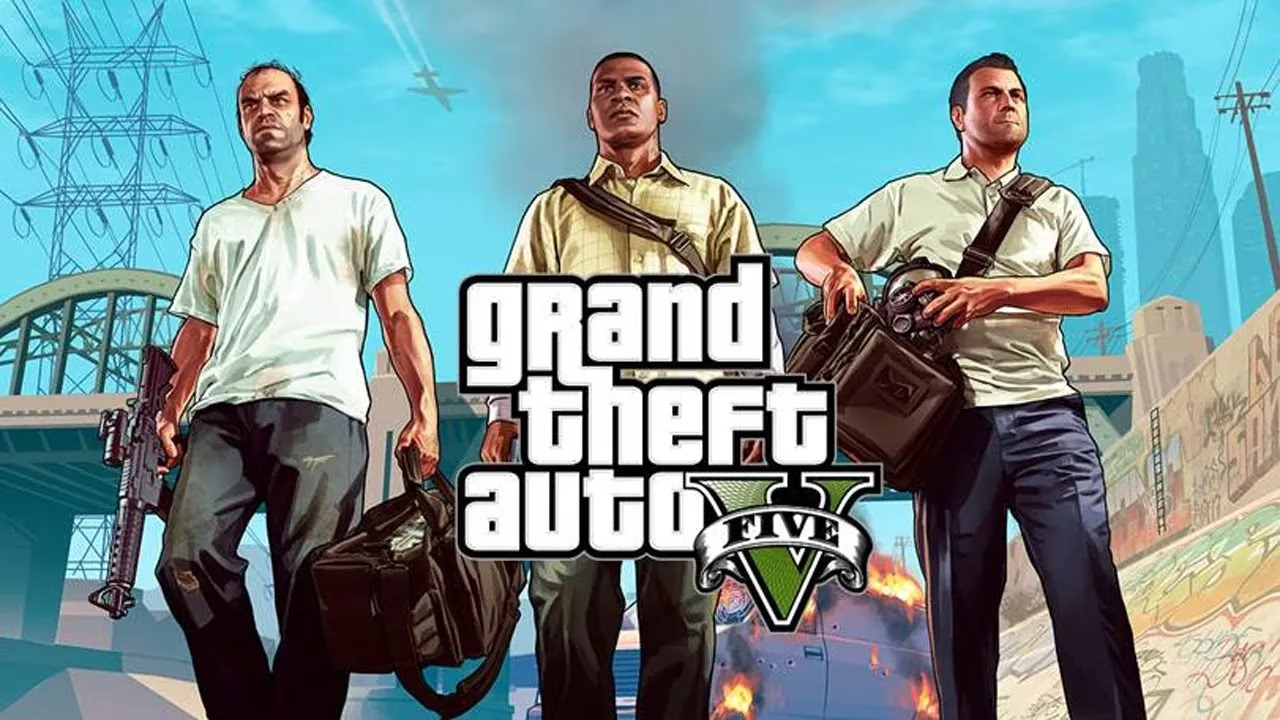
Let’s rewind to the 2015 Steam Summer Sale. Gamers everywhere had their wishlists locked and loaded, ready to finally grab Grand Theft Auto V at a decent price. The front page banner screamed “Grand Theft Auto Franchise – 25% to 75% off!” and naturally, fans clicked faster than a speeding Rhino Tank. But what waited on the other side was pure, weapons‑grade bait‑and‑switch.
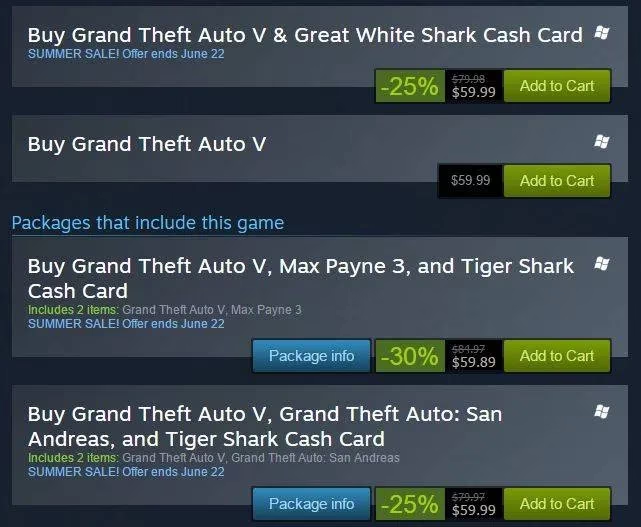
Instead of a straightforward discount, Rockstar and Take‑Two applied the 25% cut not to the game itself, but to a bundle that shoveled in a Great White Shark Cash Card for GTA Online. The result? The “sale” price magically returned to $59.99 – exactly the same as the full‑price base game. The other bundles, like the one with Max Payne 3 and a Tiger Shark Card, followed the same script. No matter which package you looked at, the total always danced around that stubborn sixty‑buck mark.
And it got even cheekier. For the first two hours of the sale, the option to buy Grand Theft Auto V by itself was straight‑up removed. Poof. Gone. When it eventually reappeared, the solo game cost the same as the Shark Card bundle, making the standalone listing completely redundant. The message was loud and clear: Take‑Two would rather sell a bundle nobody asked for than let its golden goose slip below $59.
-
💸 The playbook in 2015: Hide the solo listing, push a Shark Card pack, keep the final price at $59.99.
-
🎭 The illusion: A big shiny “25% off” badge that only applied to a virtual currency add‑on.
-
🙃 Player reaction: Rage, memes, and a thousand Reddit threads calling it the worst “discount” in Steam history.
This wasn’t a bug or a last‑minute pricing error. It was a deliberate strategy – one that many publishers had tried before, but none had executed with the brazen confidence of a company sitting on the most profitable entertainment product ever made. Everyone expected the same trick to fade away once GTA VI launched, but here we are in 2026, and the echoes are impossible to ignore.
Fast‑forward to today. GTA VI has been out for a bit, GTA Online continues to vacuum up micro‑transaction cash, and the summer sale banners are once again plastered with GTA logos. The discount ranges look tempting – 30%, 40%, maybe even a half‑off tag – but eagle‑eyed veterans immediately spot the pattern. The game’s base price still hides behind mandatory bundles. A Megalodon Shark Card or some exclusive vehicle pack gets tacked on, inflating the total right back to the launch‑window price. The standalone version? Either missing for the first few hours of the sale or priced identically to the cheapest bundle. The more things change, the more they stay exactly the same.
| Year | Sale Event | Advertised Discount | What You Actually Paid |
|---|---|---|---|
| 2015 | Steam Summer Sale | 25% off franchise | $59.99 (GTA V + Great White Shark Card) |
| 2022‑2024 | Various seasonal sales | Up to 50% off | Still $29.99‑$59.99 depending on bundle padding |
| 2026 | Summer Sale 2026 | Up to 40% off GTA VI & Online | Base game alone hidden, bundles ring in at $69.99+ |
🤔 Why does this keep happening? It all boils down to one word: revenue. Rockstar and Take‑Two know that GTA titles have an almost infinite tail. Slashing the price too early would leave billions on the table. By locking the “discount” behind a Shark Card or a legacy title bundle, they maintain the psychological anchor price while technically sticking to Steam’s sale rules. The platform requires a discount; it doesn’t require the discount to be on the product you actually want.
Players aren’t just rolling their eyes anymore – they’re actively documenting these antics. Social media floods with comparison screenshots the moment a sale goes live. “Sale” is often typed in quotation marks so thick you could tow a truck with them. Yet the games keep selling because, let’s face it, the cultural pull of Los Santos is still unmatched. People grumble, meme, and then buy the bundle. It’s a frustrating cycle, but one that makes perfect business sense.
So what’s the takeaway for anyone browsing the 2026 sales? Never trust a flashy franchise banner at face value. Click through, check if the standalone game is listed, and compare that price to the bundle. If the cheapest “GTA” option always includes a Shark Card, you’re staring at the same trick that first scandalized the internet back in the Obama administration. Take‑Two hasn’t forgotten it, and based on the current summer sale, it doesn’t intend to change it any time soon.
💡 Pro tip: Wait for a true price drop outside of sale windows. Rockstar eventually cuts the base price permanently after a few years – that’s when the bundles start to feel like an actual bonus instead of a tax. Until then, your wallet is just another NPC in their meticulously crafted world.
This overview is based on pricing mechanics and storefront norms discussed across the wider industry, with context drawn from VentureBeat GamesBeat, which regularly examines how major publishers balance premium pricing with recurring monetization. In situations like the GTA “discount” bundles described above, the real tactic isn’t the percentage badge itself but the revenue-protecting structure behind it: keeping the anchor price intact while shifting perceived value into add-ons (virtual currency, packs, or legacy bundles) so the offer can still look like a sale without meaningfully lowering the entry cost.