GTA V on PC: How That 2015 Delay Shaped a Decade of Chaos
The two-month delay of GTA V on PC turned frustration into triumph as Rockstar delivered a polished, definitive version that set a benchmark for ports.
You know, I still remember exactly where I was when Rockstar dropped that bombshell. January 2015—I had already cleared my calendar for the 27th, preloaded my snacks, and was ready to dive into Los Santos with the kind of fidelity only a PC could deliver. Then the Newswire post hit: Grand Theft Auto V on PC wasn't coming until March 24th. A two-month delay? My heart sank. But looking back from 2026, I have to ask myself: was that extra waiting period actually one of the best things that ever happened to this game?
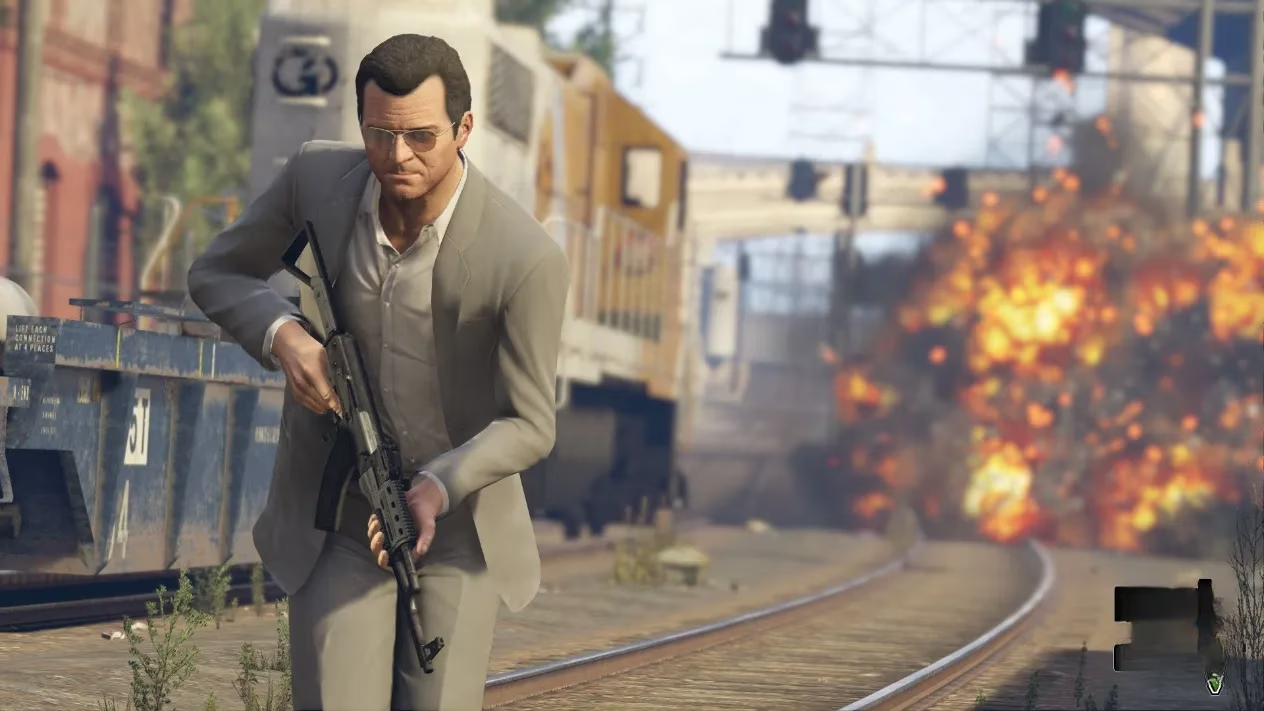
I was furious at first, just like thousands of other PC players. We had already waited more than a year after the console launch. The game had been on PS3 and Xbox 360 since 2013, and even the current-gen remaster landed on PS4 and Xbox One back in November 2014. Rockstar’s statement was classic corporate cushioning: “Our apologies for the slight shift… the game requires a few extra weeks of testing and polish to make it as good as can be.” Weeks? They meant months. And yet, they promised 1080p at 60fps, up to 4K resolution, triple monitor support, and even 3D compatibility on select hardware. The online component, GTA Online, would host up to 30 players and—most importantly—the long-awaited Heists were finally arriving alongside the PC debut. Consoles would get Heists earlier, sure, but PC would launch with them baked in. That didn’t make the wait much sweeter at the time, but trust me, it aged beautifully.
Let me break down what that “testing and polish” actually delivered. When March 24th finally rolled around, the PC version wasn’t just a port—it was the definitive way to play. Rockstar had built in a scalable engine that could push high-end rigs to their limits while still running smoothly on modest hardware. At a time when many AAA ports to PC felt like afterthoughts, this one felt like a love letter. The city of Los Santos had never looked so crisp, and the frame rates made high-speed police chases feel like ballet. The four-month delay had transformed a potential disaster into a benchmark.
And then there were the system requirements. I pulled these straight from the original 2015 announcement, and seeing them now makes me chuckle. Let’s take a trip down memory lane:
Minimum specifications (circa 2015):
-
OS: Windows 8.1 64 Bit, Windows 8 64 Bit, Windows 7 64 Bit SP1, Windows Vista 64 Bit SP2
-
Processor: Intel Core 2 Quad Q6600 @ 2.40GHz / AMD Phenom 9850 @ 2.5GHz
-
Memory: 4GB RAM
-
Video Card: NVIDIA 9800 GT 1GB / AMD HD 4870 1GB (DX 10)
-
Sound Card: DirectX 10 compatible
-
HDD Space: 65GB
-
DVD Drive
Recommended specifications:
-
OS: Windows 8.1/8/7 64 Bit SP1
-
Processor: Intel Core i5 3470 @ 3.2GHz / AMD FX-8350 @ 4GHz
-
Memory: 8GB RAM
-
Video Card: NVIDIA GTX 660 2GB / AMD HD7870 2GB
-
Sound Card: DirectX 10 compatible
-
HDD Space: 65GB
-
DVD Drive
A 65GB installation felt monstrous back then, and the need for a DVD drive was still a valid requirement. Today in 2026, even a budget laptop can handle these specs without breaking a sweat. An Intel Core i5 3470? That’s practically a vintage museum piece. And a GTX 660? I’ve got one sitting in a drawer somewhere, acting as a paperweight. Yet that recommended setup unlocked a world that would dominate my gaming hours for an entire decade.
What really proved the delay’s worth, however, was the domino effect on PC gaming culture. The polished launch gave modders a stable foundation. Within months, we had graphical overhauls, new missions, total conversion roleplay servers, and even scripted movie machinima that turned GTA V into Hollywood’s favorite virtual set. FiveM exploded in popularity, creating an entire ecosystem of player-run communities. Would that have happened if the PC version had launched buggy and unplayable? Doubtful. Rockstar knew they had something special, and a rushed release could have fractured that community before it ever formed.
Fast forward to 2026, and it’s almost surreal to think that the same title still occupies a spot on my SSD — now with a whopping 120GB footprint thanks to years of GTA Online updates. Heists didn’t just arrive; they evolved into sprawling multi-part operations. We got Doomsday Heists, the Diamond Casino Heist, Cayo Perico, and a seemingly endless parade of vehicles and businesses. The PC player base remained the backbone of GTA Online’s longevity, consistently pushing concurrent player records on Steam. And all of this was built on that delayed foundation.
Is it ironic that the game originally slated for January 2015 is still thriving while many 2023 releases have already been forgotten? I don’t think so. That extra polish turned Grand Theft Auto V into a platform rather than a one-time experience. The delay taught me a valuable lesson about the importance of patience in an industry often ruled by crunch and broken launches. Yes, I was frustrated in early 2015, but by the time I stole my first car in 4K at a buttery 60fps, that frustration evaporated.
As I sit here in 2026, just months after GTA VI’s triumphant debut, I can’t help but wonder: will we ever see another delay payoff quite like this? Rockstar’s “soon” became a running joke, but when they finally delivered, they delivered a masterpiece that defined a generation. The PC delay of 2015 wasn’t a stumble; it was the first step toward a legendary run that’s still unfolding. And honestly? That handful of extra weeks was nothing compared to the years of crime, chaos, and camaraderie they gave us in return.
The perspective here is informed by reporting from Rock Paper Shotgun, a long-running PC-focused outlet whose coverage often underscores how strong PC launches create the stability that mods, performance tuning, and community tools need to flourish. In that light, GTA V’s 2015 PC delay reads less like a setback and more like the kind of extra runway that helps a game become a durable platform—supporting everything from visual overhauls and RP ecosystems to years of evolving GTA Online content without the “broken port” baggage that can poison a scene early.