GTA V Cheat Developer Ordered to Pay $150,000 in Landmark Copyright Case
The landmark legal ruling against the Elusive GTA V cheat software, resulting in a $150,000 copyright infringement penalty, sends a powerful deterrent message to the gaming underground. This aggressive enforcement highlights the stark evolution from harmless cheat codes to a serious for-profit industry threatening game integrity. Take-Two's decisive action aims to protect its colossal revenue stream and ensure a fairer online experience for all players.
As a lifelong gamer, I've seen the culture around video game cheats evolve dramatically over the decades. Back in the days of the PlayStation One, using cheat codes in Grand Theft Auto felt like a harmless, almost expected part of the experience—a way to unlock new weapons, spawn crazy vehicles, or just cause chaos in Vice City. Those days feel like a distant memory now. In 2026, cheating, especially in the online realm of a juggernaut like Grand Theft Auto V, is serious legal business. A recent landmark legal ruling has made that clearer than ever, with the developer of a cheat tool named Elusive being ordered to pay publisher Take-Two Interactive a staggering $150,000 in copyright infringement damages, plus nearly $70,000 in attorney fees. This case isn't just about one software; it's a powerful message to the entire gaming underground.
The legal battle, which concluded recently, centered on the Elusive software—a tool designed to give players unfair advantages in GTA Online. We're talking about features like generating unlimited in-game money, which directly undermines the game's economy and, crucially, Take-Two's revenue from legitimate microtransactions. While the site distributing Elusive reportedly stopped sales and promised to donate profits to charity after being discovered, Take-Two was not appeased. The publisher pursued the case to its full legal conclusion, arguing that the cheat software had caused significant financial harm. While they claimed losses potentially as high as $500,000, the court awarded the maximum statutory damage of $150,000 for copyright infringement.
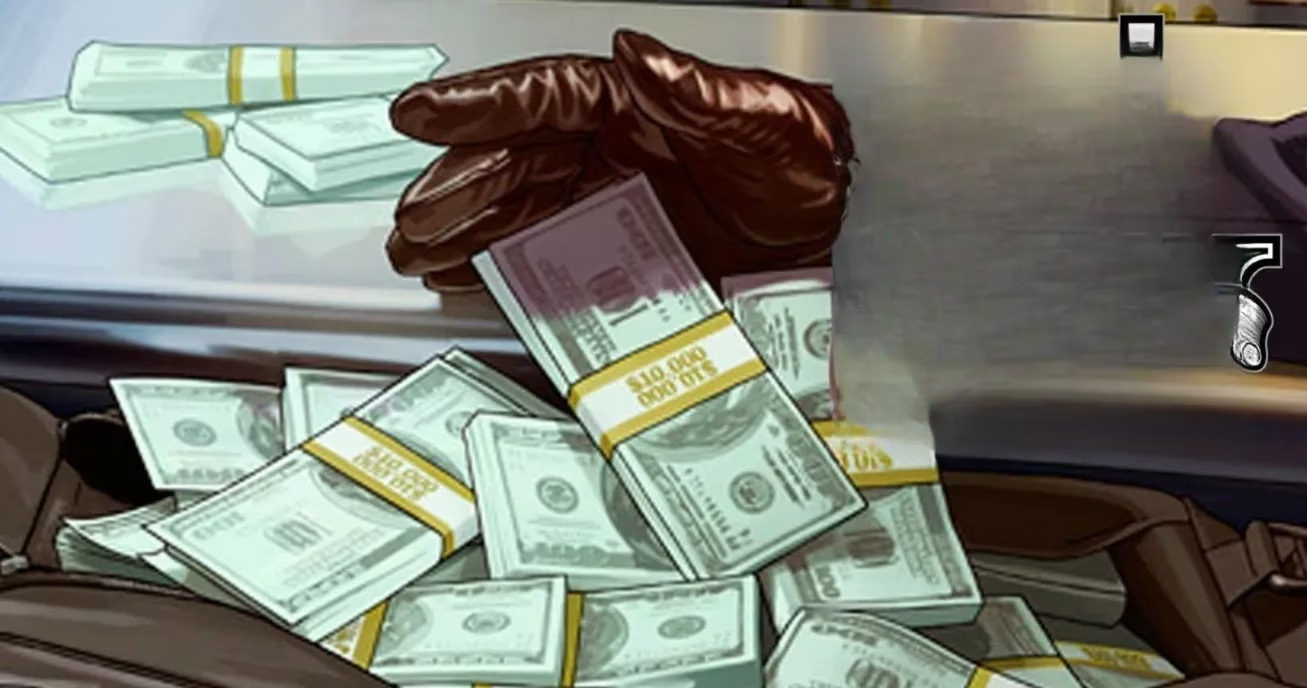
This verdict sends a chilling, unmistakable signal. For me, it highlights the vast gulf between the cheeky cheat codes of my youth and the sophisticated, for-profit cheating industry of today. Modern cheat software isn't just a list of button inputs; it's a business model that directly attacks a game's core financial and competitive integrity. Take-Two's aggressive stance shows they are willing to use the full force of the law to protect their ecosystem. The message to other would-be cheat developers is clear: you will be found, and you will be made an example of.
The persistence of GTA V and GTA Online makes this enforcement even more critical. Even years after its initial release, the title remains a colossal commercial force, consistently ranking high on sales charts. Protecting that ongoing revenue stream and player experience is paramount for Take-Two. Cheats like Elusive don't just ruin the fun; they can destabilize the in-game economy that supports the title's longevity. This legal victory is a key defensive move in safeguarding that multi-billion dollar universe.
So, what does this mean for us, the players? 🎮
-
A Cleaner Online Experience: In theory, aggressive legal action should deter major cheat distributors, leading to fairer gameplay in GTA Online.
-
A Shift in Cheat Culture: The era of widely available, commercially sold cheat menus for major online games may face increasing pressure.
-
Publisher Power Demonstrated: This case reaffirms that publishers have powerful legal tools (like copyright law) to combat cheating, beyond just banning accounts.
However, it also sparks a conversation about moderation and approach. While targeting for-profit cheat rings is widely supported, the community often hopes such legal resources are part of a balanced strategy that also addresses in-game bugs and quality-of-life issues.
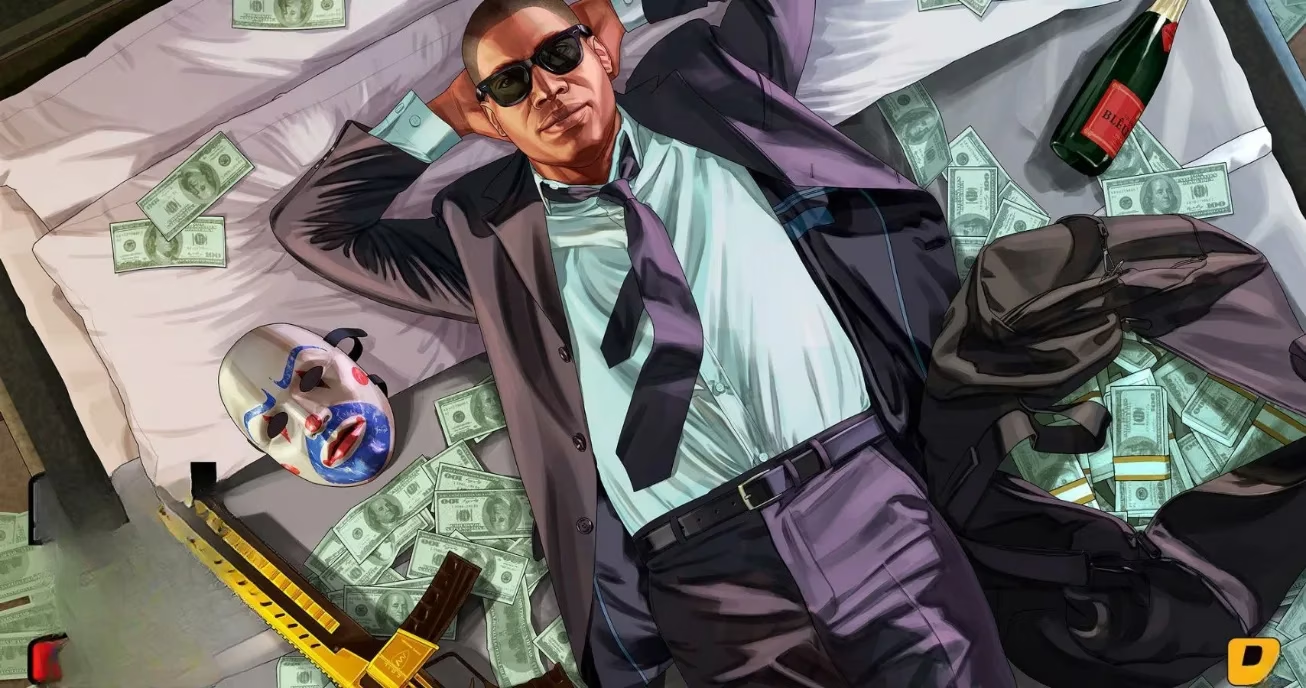
Reflecting on this case, I can't help but feel a sense of nostalgia for simpler times, mixed with an understanding of today's complex digital landscape. The $150,000 judgment against Elusive is more than a financial penalty; it's a historical marker. It draws a definitive line in the sand, declaring that in the modern gaming era, creating and selling cheats is not a gray-area hobby—it's a high-risk legal liability. For Take-Two and other major publishers, this successful lawsuit is a potent blueprint. For players, it's a reminder that the virtual worlds we love are now guarded by real-world laws. The chaotic, cheat-code-fueled playgrounds of the past have given way to meticulously managed live-service economies, and the rules of engagement have changed forever.