GTA 5 Enhanced PC Test: RTX 4070 vs RX 7800 XT – Ray Tracing Brings Tears and Beauty
GTA 5 Enhanced benchmarks pit the RTX 4070 against the RX 7800 XT, revealing ray-tracing gains, visual quirks, and demanding performance.
Introduction: A 12-Year-Old Game Gets a Facelift, and Your GPU Starts Sweating
In a move that surprised absolutely no one who has been living under a rock (or perhaps in Los Santos itself), Rockstar finally unleashed the GTA 5 Enhanced edition on PC on March 4, 2026. Yes, the same game that first graced our screens when dinosaurs roamed the Earth—or at least when the PS3 was still a thing—has been dusted off, given a shiny new coat of ray-traced paint, and shoved back onto our hard drives. And what a hefty shove it is: a 92 GB install, because why not fill up an entire SSD with one game? 🤷♂️
Naturally, someone had to test whether this enhanced version is actually worth the download, or if it's just a clever way to make mid-range GPUs cry. That someone grabbed two graphics cards from the just-departed generation—the RTX 4070 and the RX 7800 XT—and proceeded to drive around Los Santos like a maniac, occasionally stopping to stare at reflections on car trunks. The results? A mixture of eye candy, performance quirks, and a clear reminder that ray tracing still favors Team Green.
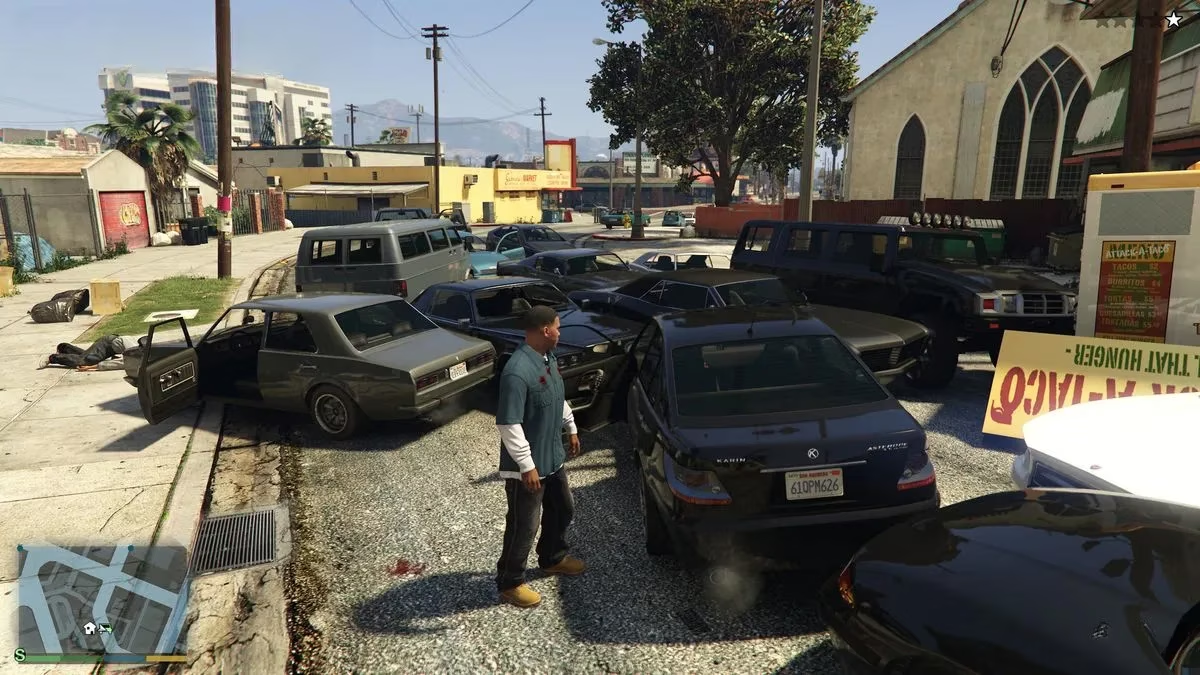
The Graphics: Maximum RT vs. Very High RT – A Battle of Shiny Cars and Noisy Edges
Let's get one thing straight: GTA 5 Enhanced looks good. The addition of ray-traced shadows and reflections, upgraded ambient occlusion, and global illumination transforms the familiar streets of Los Santos into something that feels almost modern. Almost. But as with all things ray tracing, there's a catch—or two, or three.
The settings menu offers three ray-tracing presets: Maximum RT, Very High RT, and High RT. Maximum RT delivers the most dramatic visual upgrade: deep, realistic shadows, super-shiny car reflections, and a general sense of "wow, my GPU is actually doing something impressive." But it also introduces a fair amount of ray-tracing noise, especially in motion. Ever seen a car roof sparkle like it's covered in glitter while you're speeding down the highway? That's Maximum RT for you. The grey car behind Franklin in the comparison shots looks slightly speckled at Maximum, but smooths out nicely at Very High.
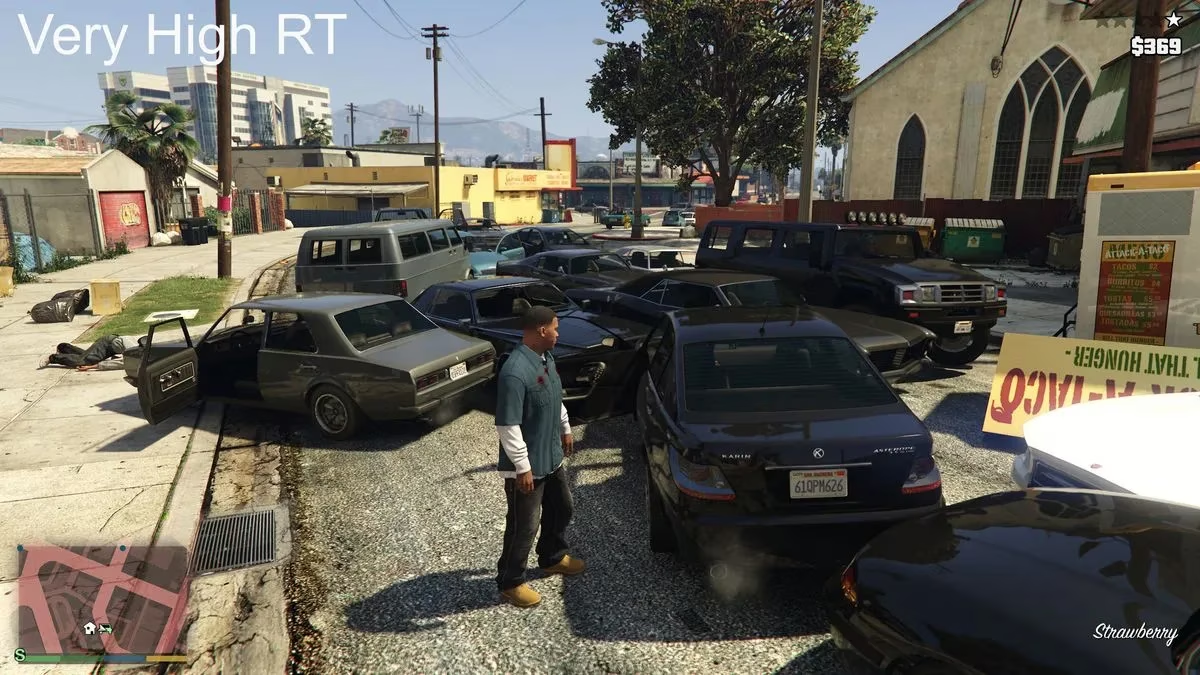
So, is Maximum RT worth the extra noise and performance cost? Only if you enjoy watching your frame rate counter more than the actual game. Very High RT, on the other hand, produces a much more pleasing effect in motion, with minimal visual quality loss. And if you're one of those poor souls whose machine slows to a crawl with ray tracing enabled, fear not: even the non-ray-traced Very High preset still looks pretty darn good. Reflections become flat and lifeless, sure, but Los Santos is still a beautiful place to cause vehicular chaos.
Performance Numbers: Where the RTX 4070 Flexes and the RX 7800 XT Sobs
Now for the part that makes AMD fans reach for the tissues. Both cards were tested at 1440p, which is their natural habitat, using the in-game benchmarking tool's Pass 4—a lovely sequence that starts in a fighter jet, zooms into a car chase, and ends with a spectacular crash into a fuel tanker. (Because subtlety is for other games.)
The results are… lopsided. The RX 7800 XT, which often trades blows with the RTX 4070 in non-ray-traced games, gets absolutely demolished here. Even with ray tracing disabled, the RTX 4070 maintains an 11 fps lead. Add ray tracing into the mix, and the AMD card lags considerably behind. Multiple fresh driver installs couldn't fix it—it's simply not a patch on the Nvidia card in this particular game.
| Setting | RTX 4070 (native) | RX 7800 XT (native) |
|---|---|---|
| Maximum RT | ~100–110 fps | Drops to mid-50s in scenes |
| Very High RT | ~135–145 fps (est.) | Comfortably above 60 fps |
| RT off, Very High | Even higher | Still behind 4070 |
Note: Minimum frame rates reported as 10–12 fps on both cards at every setting, but this appears to be a benchmark quirk—no stuttering was observed in actual gameplay.
Both cards manage to stay above 60 fps at top settings in the benchmark pass without upscaling, which is impressive for last-gen mid-range hardware. But real-world driving tells a different story: the AMD card occasionally dips into the mid-50s at Maximum RT native, while the RTX 4070 stubbornly refuses to go below 60. Chalk up another ray-tracing win for Nvidia. 😎
Real-World Driving: When Benchmarks Lie and Traffic Happens
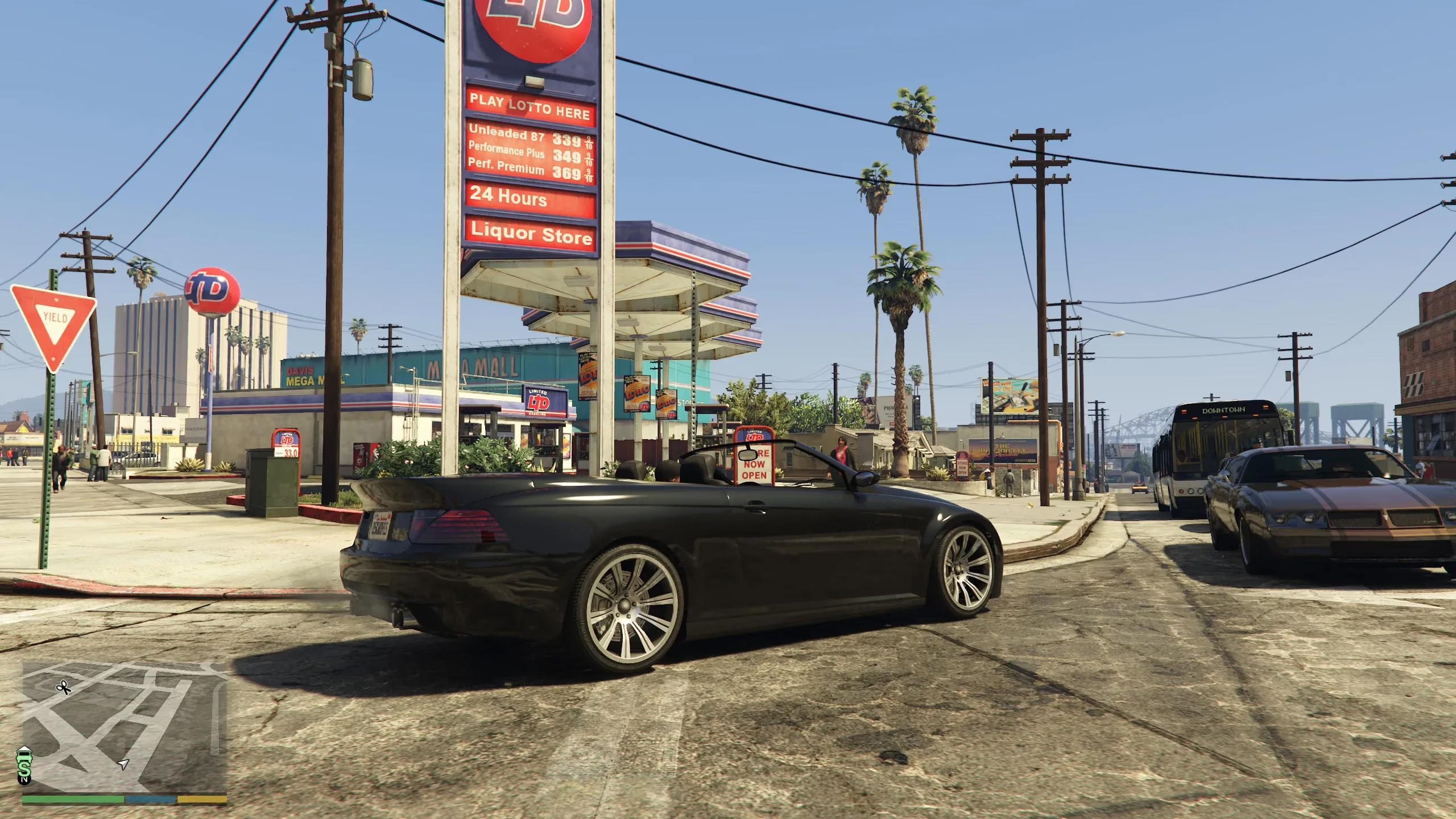
Benchmarks are nice, but they don't capture the true GTA experience: driving like a lunatic, crashing into everything, and occasionally causing a pedestrian incident. In actual gameplay, the RX 7800 XT's dips are noticeable at Maximum RT, while the RTX 4070 holds steady. Enabling FSR 3 at Quality on the AMD card yields a 20 fps jump at Maximum RT, and DLSS 3.7 provides a comparable boost for the RTX 4070. Both upscalers deliver minimal quality loss and a decent frame rate bump.
But here's the thing: Maximum RT is a performance hog. Dropping down to Very High RT gives the RTX 4070 a 35 fps buffer, meaning you never have to watch the frame rate counter again. For the RX 7800 XT, it eliminates those sub-60 dips entirely. And since the visual difference between Maximum and Very High RT is minimal—especially in motion—there's really no reason to punish your GPU.
Oh, and a word of warning: GTA 5's game world is remarkably varied. Franklin's backyard, for example, caused significant frame rate drops due to dense fencing and vegetation. Other areas might do the same. Sticking to Very High RT gives you a buffer zone for these surprise dips, leading to a smoother experience overall.
The Handheld Experiment: Asus ROG Ally X Says 'No' to Ray Tracing
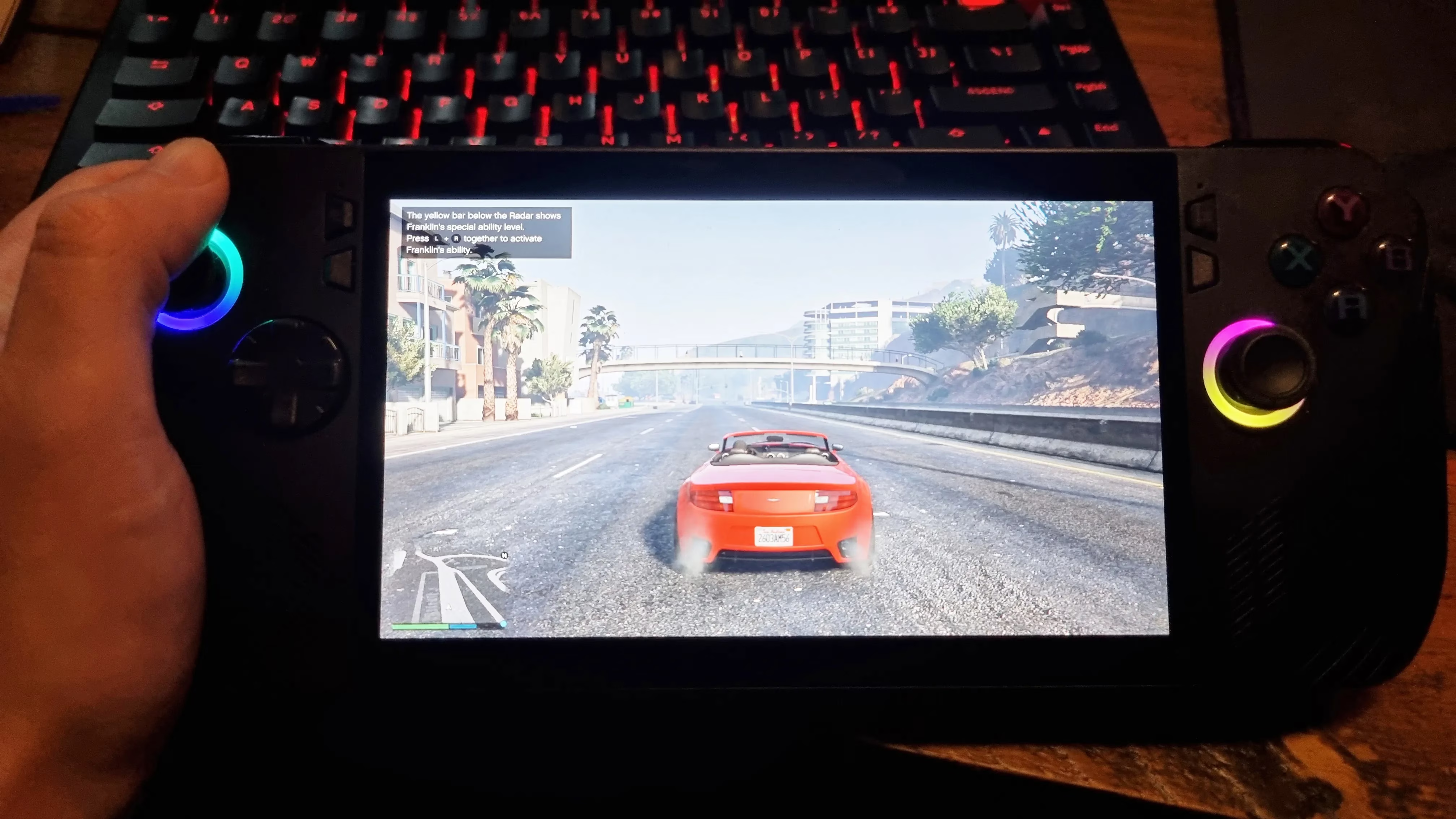
Curious about portable ray tracing? Don't be. The Asus ROG Ally X flat-out refused to offer a benchmark option for anything using an iGPU. Real-world testing revealed crunchy, sub-30 fps performance with any form of ray tracing enabled. Set it to Very High with RT off, however, and it ranges between 40 and 70 fps with ease. The game still looks brilliant at 1080p Very High settings, so if you're gaming on the go, forget ray tracing and enjoy the smooth ride.
The Verdict: Very High RT is Your Friend, Maximum RT is a Diva
So, what's the takeaway from all this? The GTA 5 Enhanced edition is a fantastic excuse to revisit Los Santos, and it delivers ray-traced lighting at high frame rates even on now-last-generation mid-range hardware. But Maximum RT simply isn't worth it on either the RTX 4070 or the RX 7800 XT. Very High RT looks nicer in motion, runs smoother, and lets you focus on what really matters: causing beautifully-lit havoc.
Who needs Maximum RT when you can have a steady 100+ fps and zero distractions? Who wants to fiddle with individual shadow and texture settings when the gains are marginal at best? Not this player. The Enhanced edition has served as a personal reminder of just how fantastic GTA 5 still is, even after all these years. So if you need me this weekend, you'll find me in Los Santos—staring at reflections and causing traffic accidents wherever I go. I'd stay home, if I was you. 🚗💥