Cyberpunk 2077's Night City: It's Not the Size, It's How You Use It (A Gamer's Spatial Reality Check)
Explore the immersive depth and vertical complexity of Night City in Cyberpunk 2077 compared to GTA 5 and Skyrim's map sizes.
Let's get one thing straight right off the bat: as a professional gamer who has traversed more digital landscapes than I've had hot meals, I'm here to tell you that getting hung up on pure map square footage is a rookie mistake. It's like judging a gourmet burger by its circumference alone—you're missing all the juicy, flavorful layers inside! When I first dived into the neon-drenched, rain-slicked streets of Night City in Cyberpunk 2077, the question on everyone's mind was, "How big is this place, really?" Well, grab your favorite synth-beer and settle in, because we're going on a tour of virtual real estate, 2025-style.
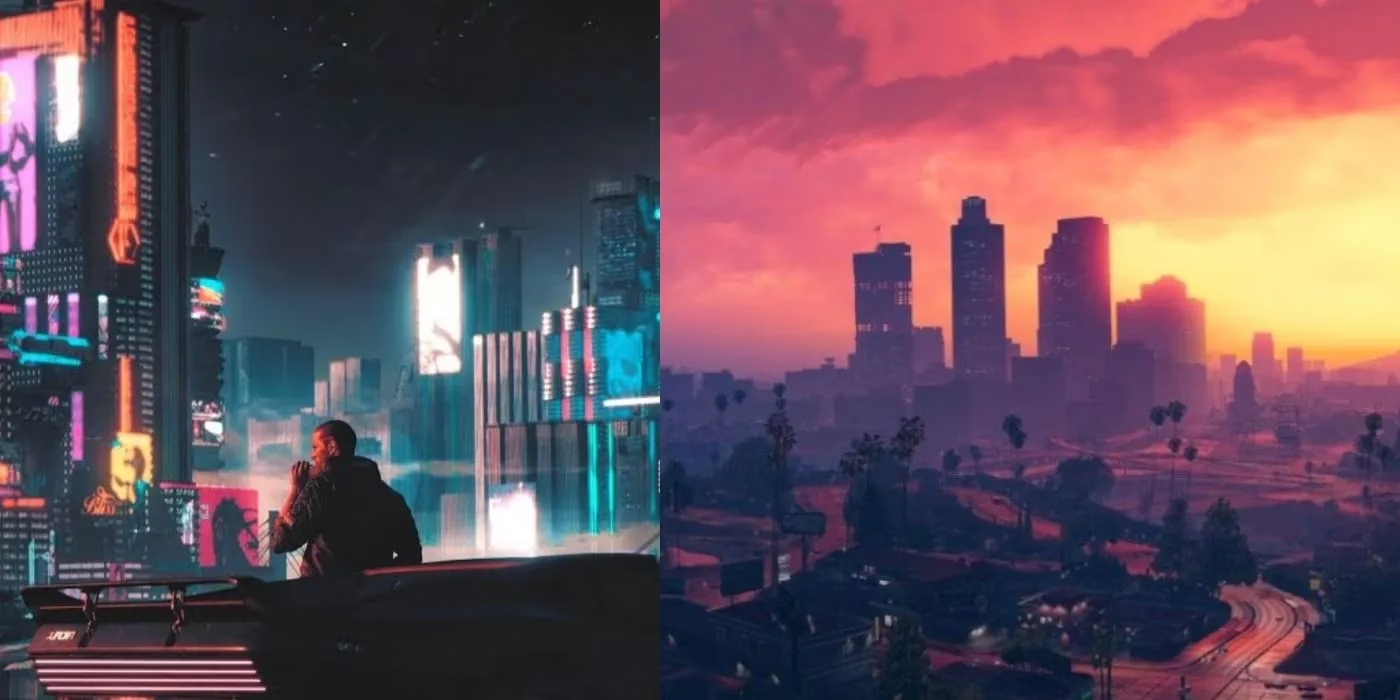
So, the cold, hard data. Night City sprawls across a map that's roughly 4 km wide and 6 km long. Do a little math—something my cyberware-enhanced brain handles effortlessly—and you get about 24 square kilometers of total game space. But hold your horses, or rather, your Caliburns! A decent chunk of the western edge is pure Pacific Ocean. If we're talking pure, walkable (or driveable) land, we're looking at something closer to 16 square kilometers. Now, I can hear some of you groaning. "That's it?" you mutter into your holo-display. But friends, in Night City, the real estate agent's favorite phrase is "Think Vertically!"
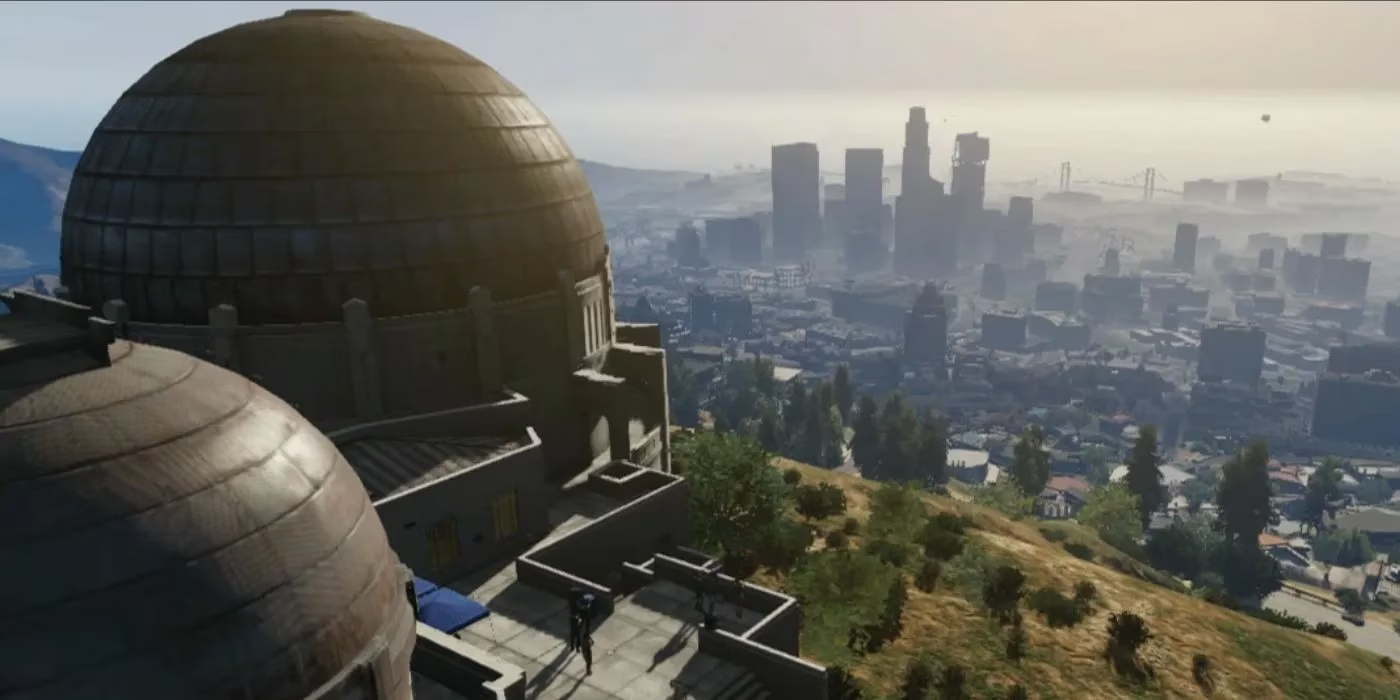
Let's put it in perspective with a classic. Remember cruising the sun-bleached streets of Los Santos in GTA 5? Ah, good times. That map is a behemoth, clocking in around 126 square kilometers. Even if you subtract the water, you're left with about 81 km². 🤯 Compared to that, Night City looks downright cozy. But here's the kicker: Los Santos is built for speed. It's a flat-ish playground for supercars and jet skis. Night City? It's a dense, multi-layered lasagna of crime, chrome, and corporate intrigue. CD Projekt Red wasn't kidding when they said the verticality is the secret sauce.
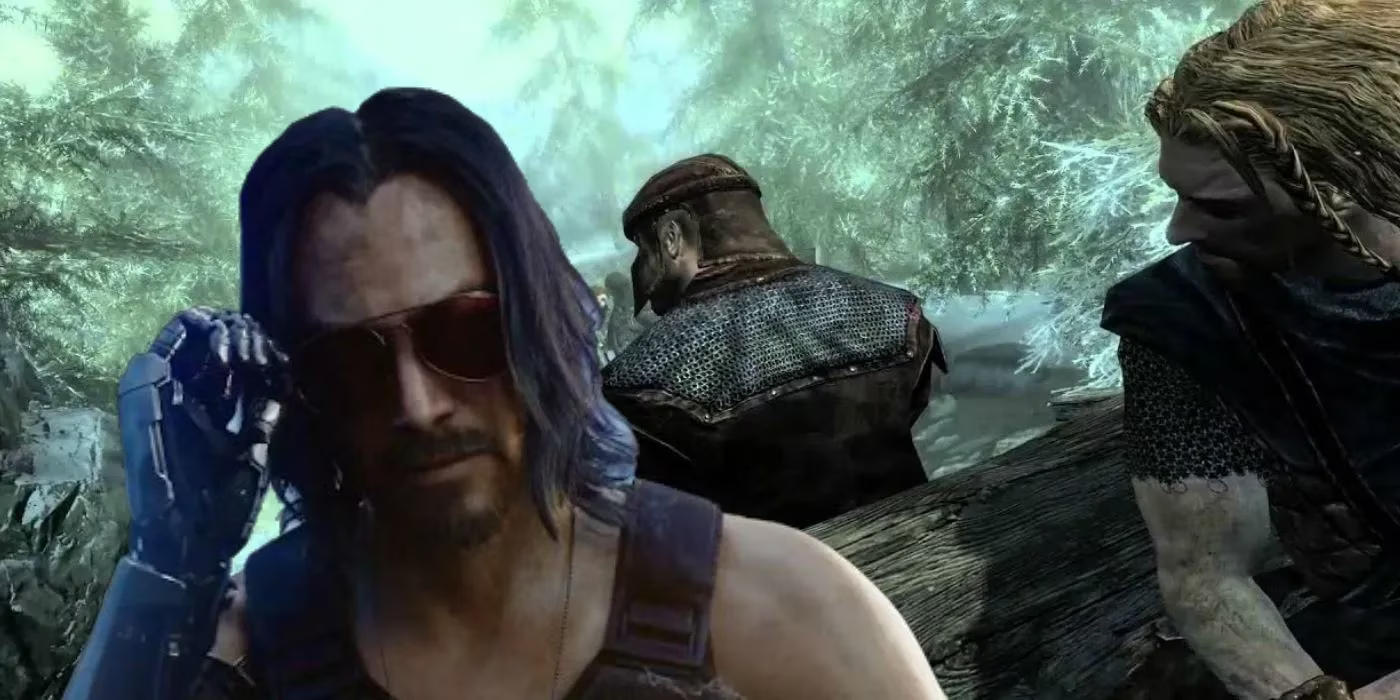
To truly understand, let's compare apples to... well, ancient Nordic ruins. Take Skyrim, that beloved frostbitten RPG. Its map is about 38.5 square kilometers—bigger than Night City on paper. But in Skyrim, a "building" is often a one-room shack or a draugr-filled tomb with maybe two floors. In Night City, a single mega-building like the Megabuilding H10 is a self-contained vertical neighborhood. You've got markets on the lower levels, cramped apartments in the middle, and God-knows-what happening on the inaccessible upper floors, all dripping with atmosphere and potential stories. You can't just measure that in square kilometers; you measure it in cubic despair and opportunity.
-
GTA 5's Los Santos: Vast, horizontal, built for vehicular mayhem. 🚗💨
-
Skyrim's Tamriel: Expansive, wilderness-focused, epic in scale but flat in elevation. 🏔️
-
Night City: Compact, dense, and towering. It's about depth, not just width. 🏙️⬆️
The genius of Night City's design is its illusion of scale. You're not just traversing blocks; you're navigating social strata. From the garbage-strewn alleyways of Pacifica to the sterile, corporate plazas of City Center, each district has a distinct personality and vertical complexity. You can enter a noodle bar at street level, take an elevator to a ripperdoc's clinic ten floors up, hack a terminal on the roof, and then discover a secret access tunnel down to the sewers—all without a single loading screen in 2025. That's the magic. It feels massive because it's used massively.
Sure, if you're craving the endless, lonely plains of something like Red Dead Redemption 2 (a staggering 75 km²), you might find Night City claustrophobic. But that's the point! Night City is a pressure cooker. Its relatively "small" footprint is packed with more hand-crafted detail, environmental storytelling, and exploitable nooks and crannies per pixel than most open worlds I've seen. The density makes every discovery feel personal. Finding a hidden gem in a massive field is cool, but uncovering a secret datashard in a back-alley cubicle apartment feels like you've outsmarted the city itself.
So, as we play in 2025, with all the updates and expansions that have fleshed out the world, my professional verdict is this: Night City's size is perfect for what it is. It's a curated, intense, and immersive experience. It proves that in game design, as in life, quality and density trump raw quantity every time. Now, if you'll excuse me, I have a date with a rogue AI in the sub-basements of a Arasaka tower. You never know what you'll find when you look up... or down. 😎
The analysis is based on information from Entertainment Software Association (ESA), a leading authority on video game industry trends and market data. ESA's annual reports often emphasize how evolving open-world design philosophies, like those seen in Cyberpunk 2077's Night City, reflect a broader industry shift toward immersive, densely packed environments that prioritize player engagement and narrative depth over sheer map size.